Arrival in California
As recorded by R.
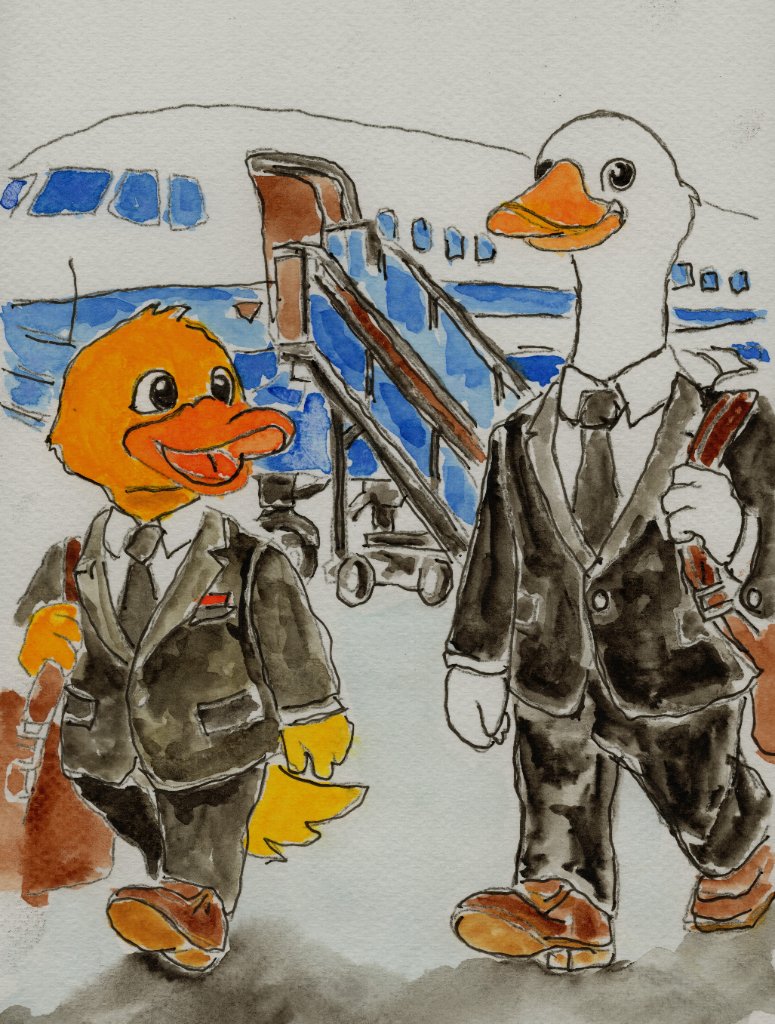
The wheels kissed the tarmac at LAX just past noon on a Tuesday. Robert stepped out first, then Mike, and for a long moment neither said a word. California in July was a different animal entirely — the light was thicker, the air tasted of salt and jasmine, and the horizon shimmered like a mirage. They had packed for a week. They had brought enough for a month. Between them they carried two suitcases, a duffel bag, a fishing rod, one borrowed surfboard, and a compass that Robert swore still worked. The stewardess asked if they needed help. Mike said they had been preparing for this their whole lives. Robert said they had been preparing since Tuesday.
First breath of California air. Mike says it tastes like adventure. I think it tastes like jet fuel. Either way — we are here.
— R.
The Longboard & the Taxicab
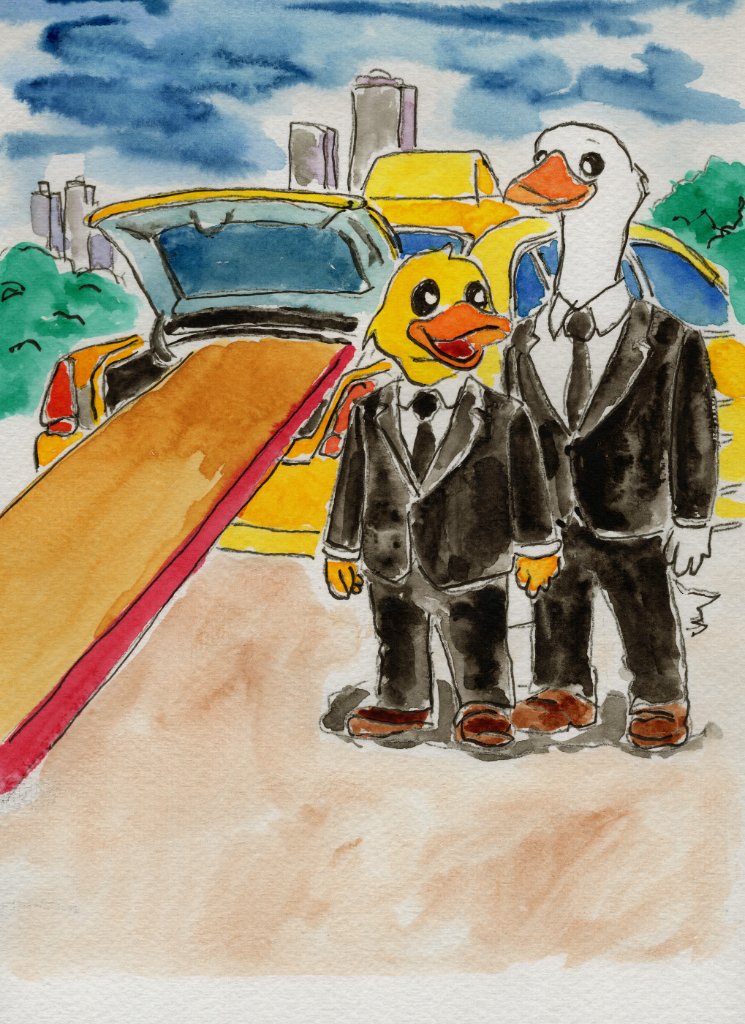
They found a cab without trouble. The driver took one look at the surfboard, one look at the two ducks, and quoted a price that was either very fair or very not. Mike rode up front and gave directions to a beach he had never been to, down a road he could not name. Robert sat in back with the windows down and his wing out the opening, watching palms and stucco and billboards drift past like a parade. The board rode in the trunk with the lid tied shut with twine the driver kept for exactly this purpose. They made it to the coast in forty minutes. The cab driver charged them double for the twine.
Cab driver charged us double for the boards. Did not even blink. Worth every cent. Mike says he knows a shortcut. He does not.
— R.
Beach Day
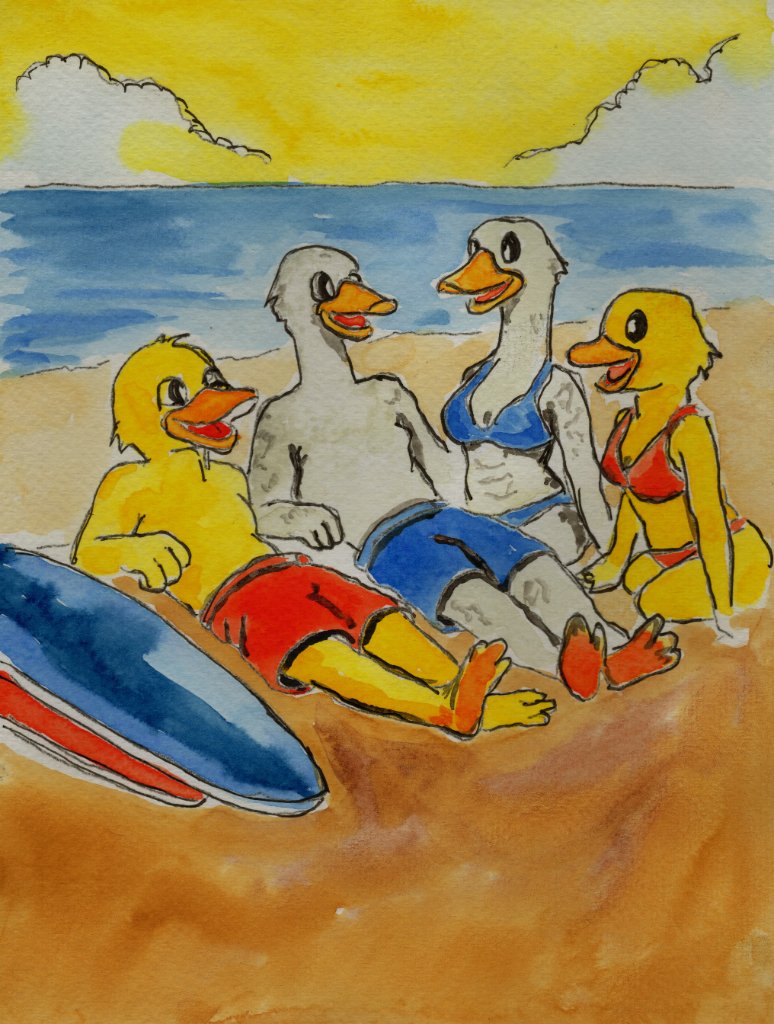
The beach was already full by the time they arrived. A crew of locals had claimed the best stretch of sand, boards planted upright in the warm earth like a small forest. Robert hung back, but Mike walked straight up and introduced himself. Nobody asked why two ducks were carrying a surfboard. Nobody asked anything at all. Within the hour they were all friends. The water was warm, the waves were clean, and the afternoon stretched out like it had nowhere to go.
Parking fills by 8.
Bring extra wax.
Best tacos near the pier.
Pelicans know where the bait fish are.
South swell = clean faces.
Offshore wind = glassy.
Before the Surf
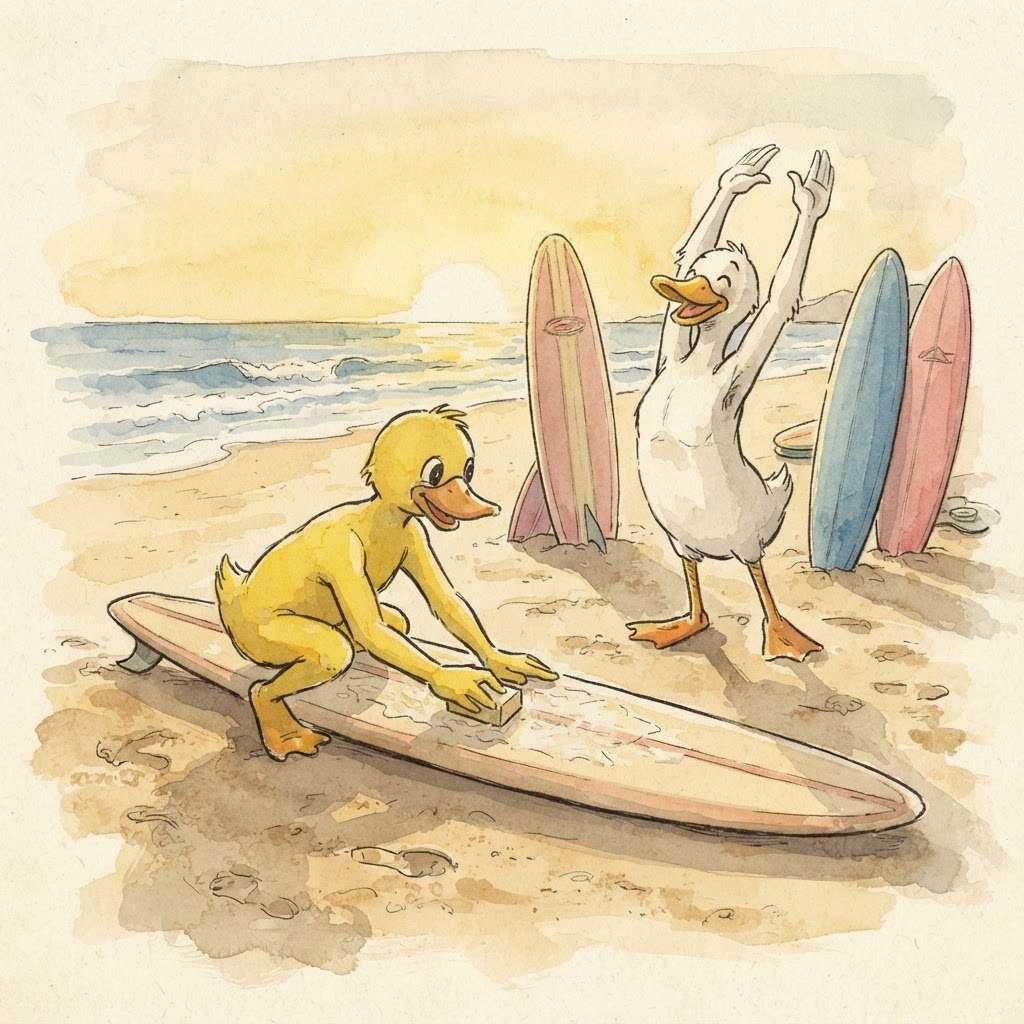
The locals had a ritual. Robert and Mike watched from the sand and tried to learn it. It was not complicated, but it was specific, and the order mattered. You did not wax before you checked the fin. You did not check the fin before you watched the water. The California surfers moved through their morning like a ceremony passed down without words.
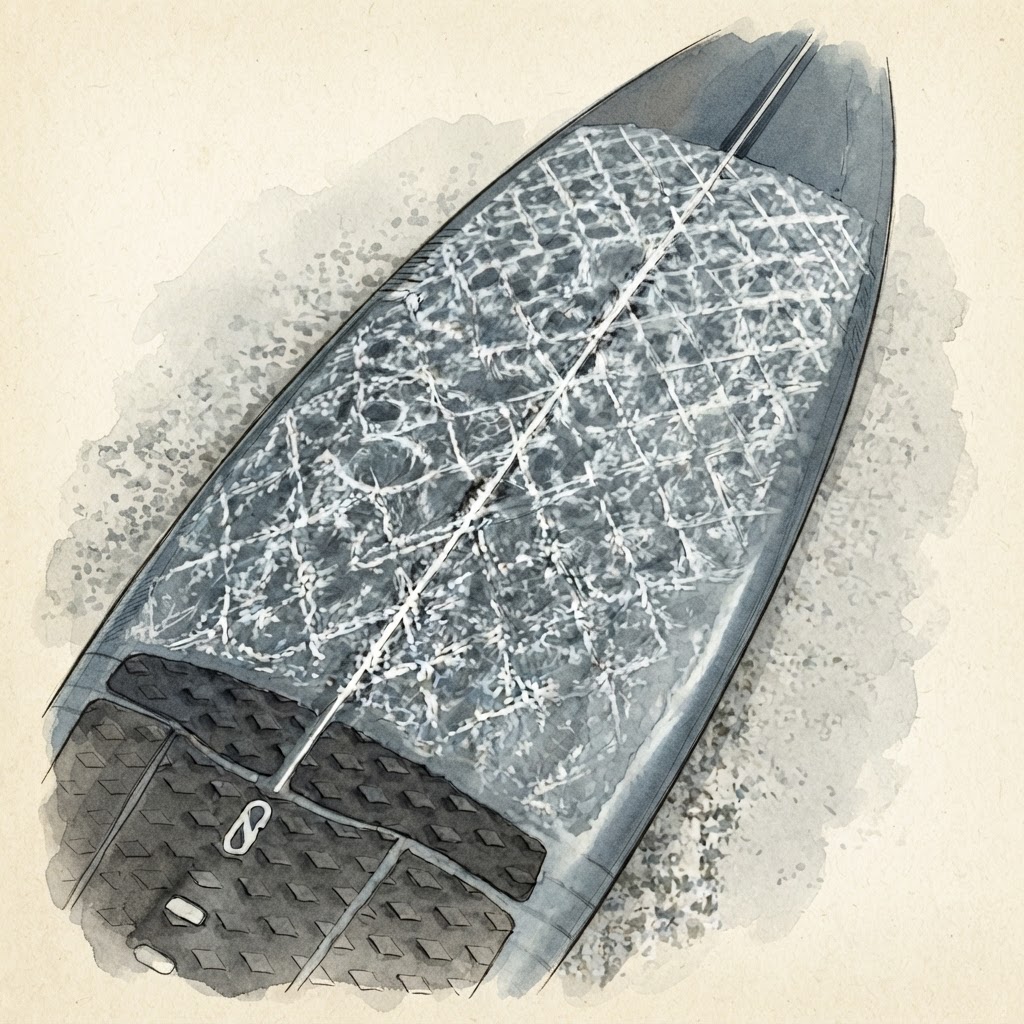
A fresh coat means grip. Robert goes crosshatch — circles first, then diagonal. Mike just rubs and hopes.
A loose fin is a loose board. Tighten the screw, check the base, run a finger along the edge for nicks.
Shoulders, neck, lower back. The ocean will ask things of your body that the parking lot did not prepare you for.
Sit. Watch. Count. The ocean speaks in intervals, and the wise duck listens before she paddles.
Mike skipped the stretch. He says he was born loose. — R.
Robert's First Wave
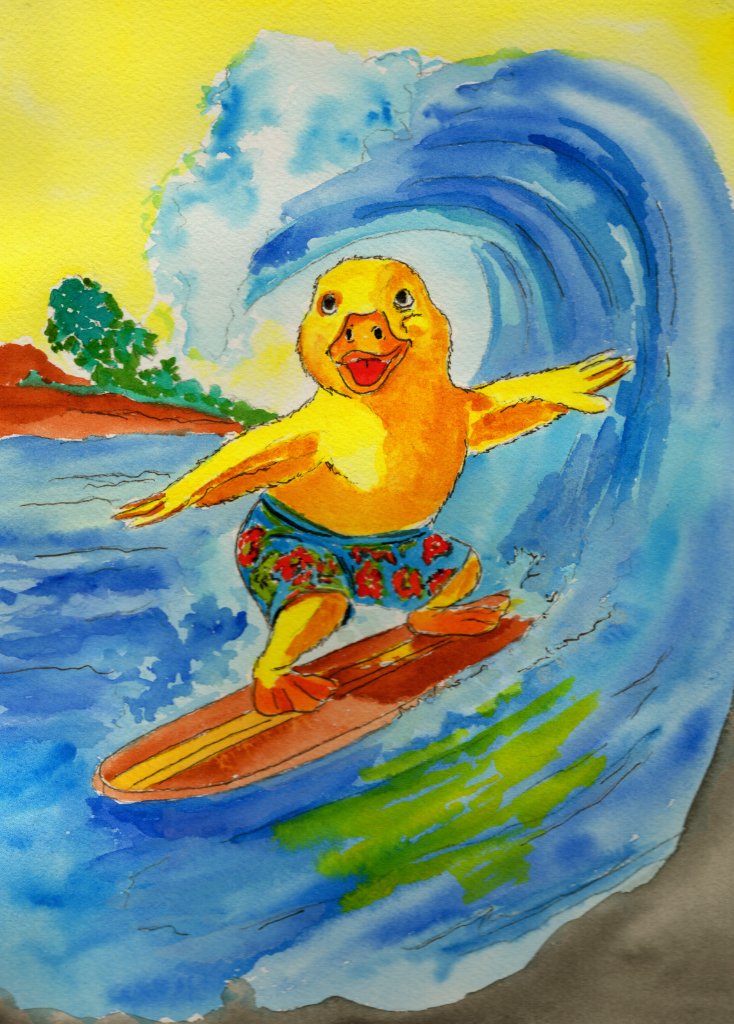
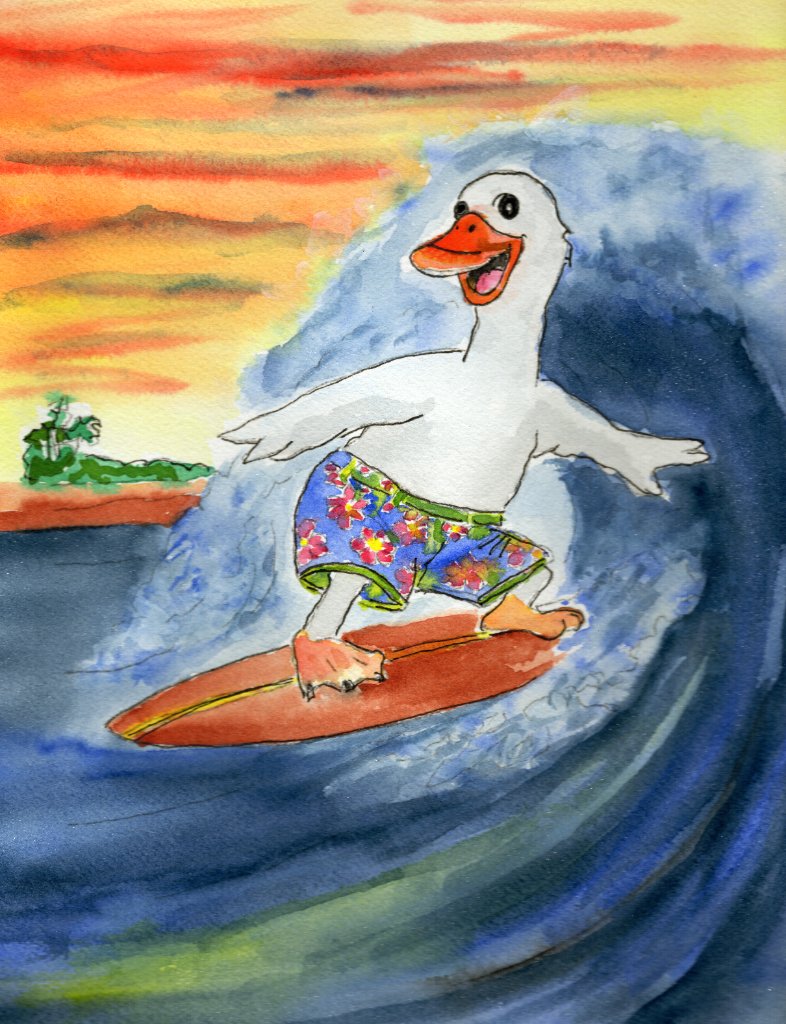
Robert paddled out alone as the sun began its slow drop. The swell came from the south — clean, organized, patient. He waited for the right one. When it came, he turned, stroked twice, and felt the board catch. For three seconds the world made sense. He stood. He actually stood. The wall of blue held him up. The shore rushed closer. And then he fell, laughing, swallowed half the Pacific, and came up grinning like he had discovered something holy.
Board Talk
Robert's board was a 9'4" pipeline gun — longer than he needed, heavier than he wanted, and borrowed from a duck named Stu who ran the rental shack near the pier. The shape was a classic noserider: rounded nose, tapered tail, single fin set far back. The deck was patched with wax Robert didn't know how to apply.
Stu had said "just rub it on." Robert had rubbed it on. The wax went on in clumps. Mike said it looked like a candle had cried on the board. Robert loved it anyway — the weight, the way it tracked, the way it held the water like a conversation. He called it "Old Reliable." Mike called it "Old Heavy." Neither name was wrong.
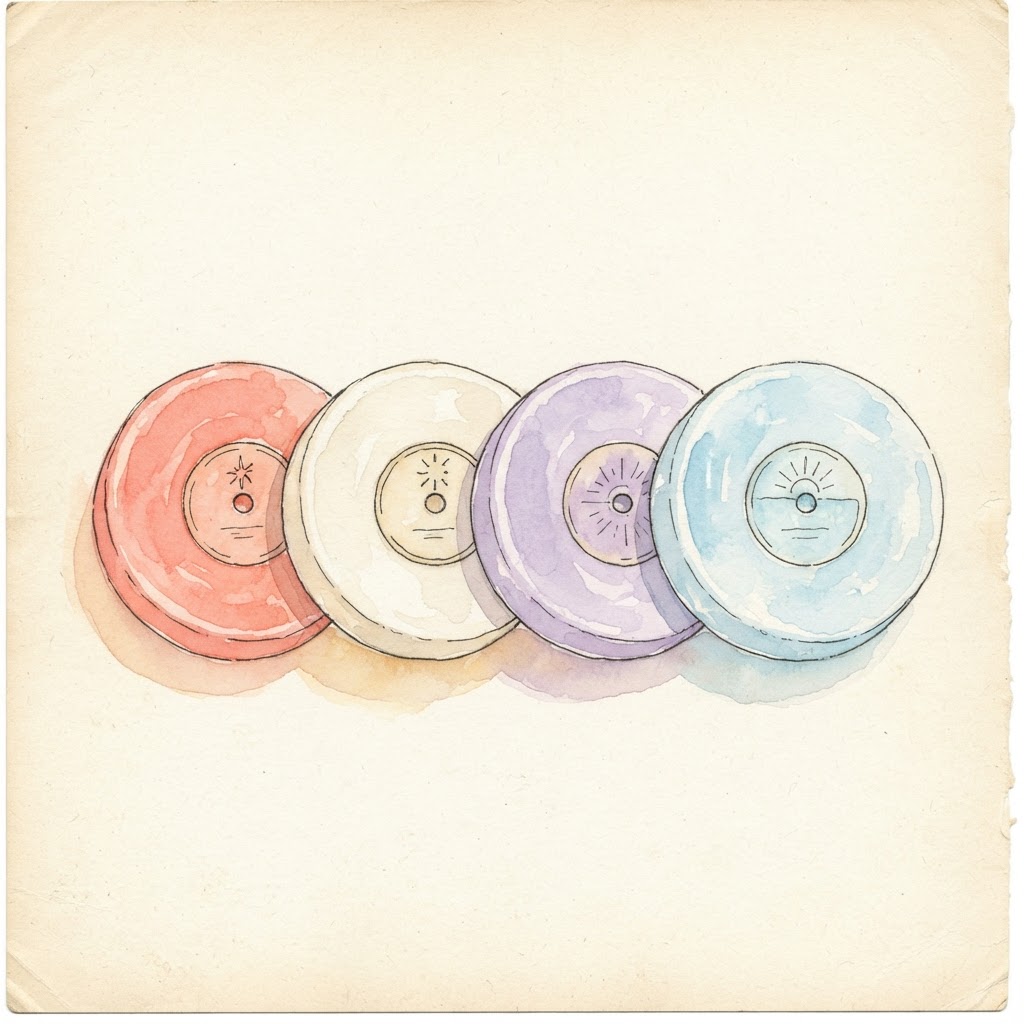
Wax of the Month
Robert's Pick — The Sticky Stuff
Robert insists the board feels faster after a fresh coat. Mike says that's impossible. The truth, as always, is somewhere in between. What we can confirm: a clean deck with proper tack holds your feet when the lip throws, and a board without wax is just a very expensive plank.
Mike says the wax doesn't make you faster. Mike also can't walk straight on sand. — R.
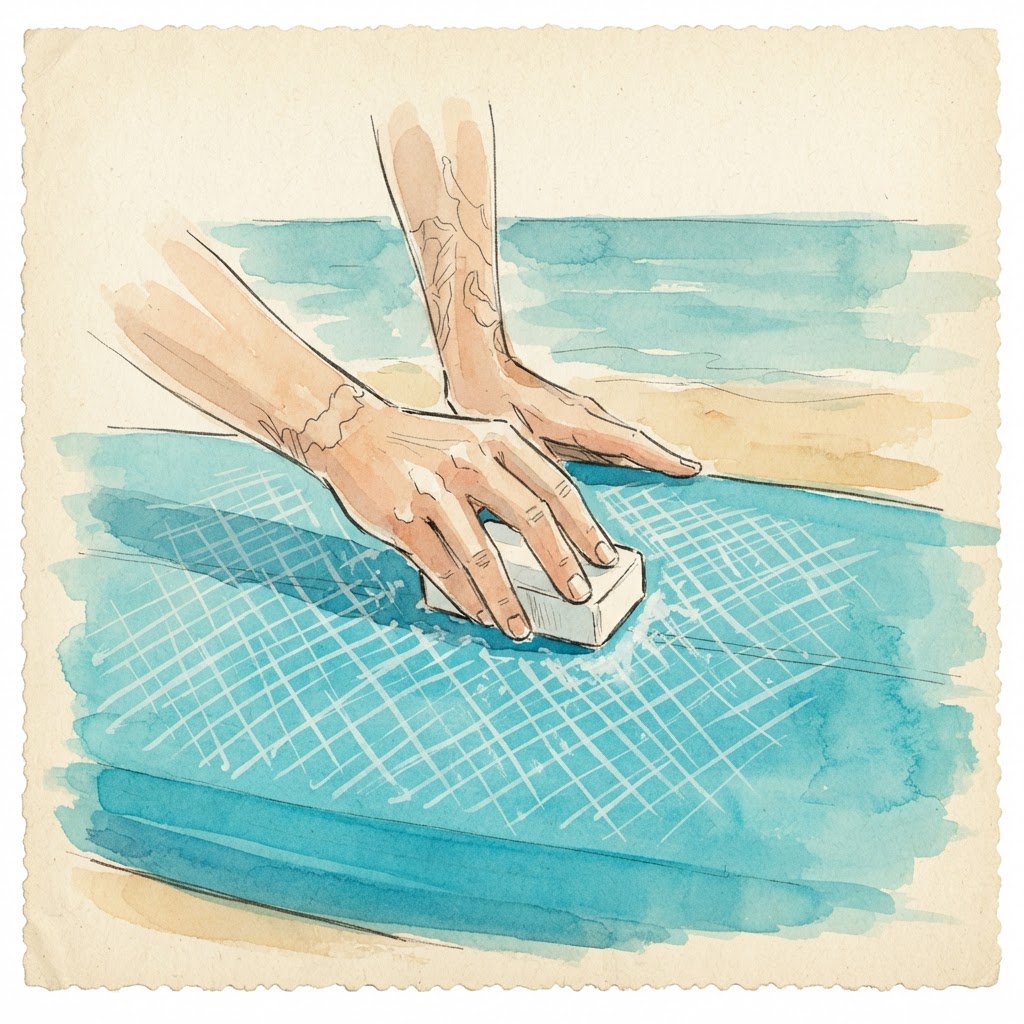
Surfboard Preparation
Without wax, a surfboard is a slip-and-slide. The deck is slick, your feet are wet, and the wave is asking you to stand on a bar of soap. Wax creates texture — tiny bumps of tack that lock your feet to the board when you pop up. Without it, you fall. With it, you might still fall, but you fall with dignity.
The trick is temperature. Cold water needs soft wax — grippy, almost gummy. Warm water needs hard wax, or it melts into a slick puddle by noon. Tropical water? You need the hardest grade they make, or you'll be surfing on cooking oil. Match your wax to your water, or accept the consequences.
The Toolbox
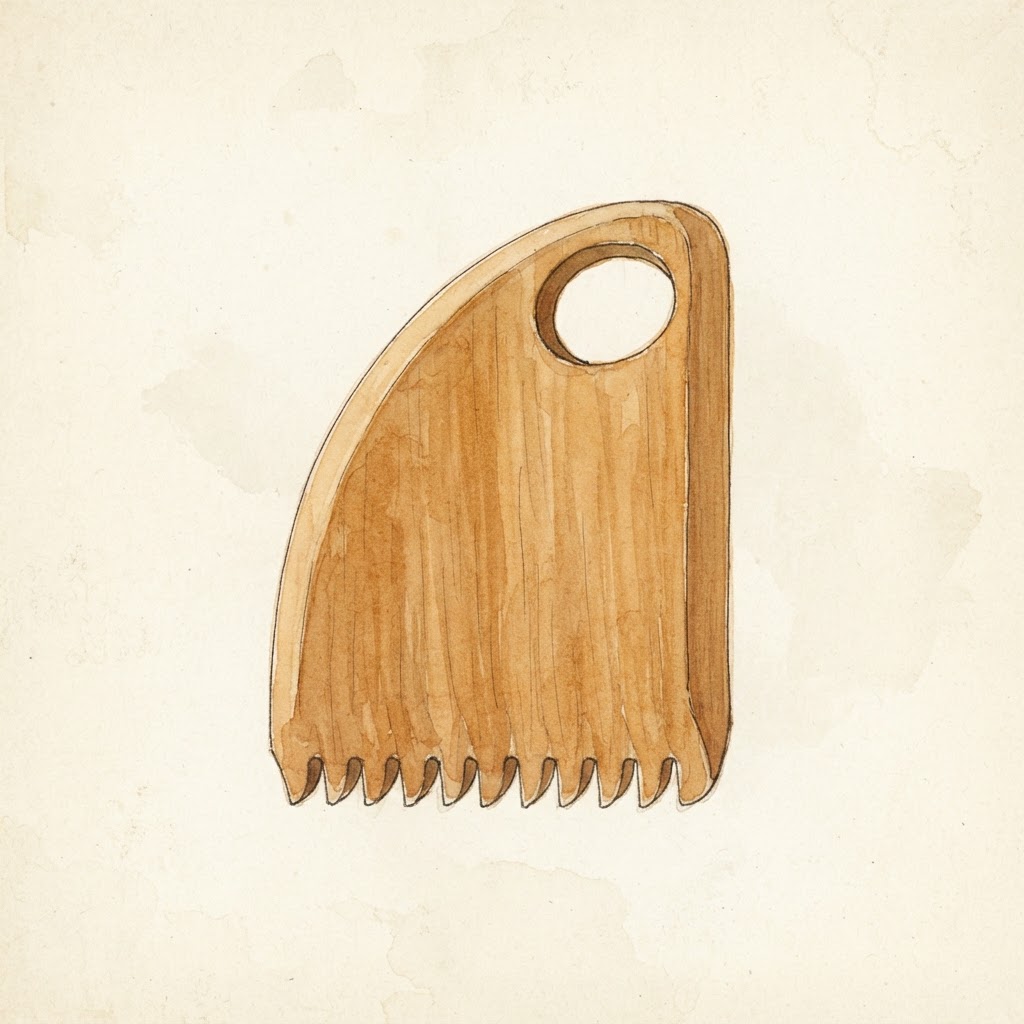 ← teethgrip →
Strip the Old
Set the comb flat against the deck and push. Old wax comes off in curls. Collect it. Do not eat it.
Rough the Surface
Run the teeth across the cleaned deck in short strokes. This gives the fresh wax something to hold.
Clean the Board
Wipe down with a cloth. Sun and a little pressure soften the residue. The deck should feel bare and slightly tacky.
A clean board is a happy board. A happy board is a fast board. Mike says boards don't have feelings. Mike is wrong. — R.
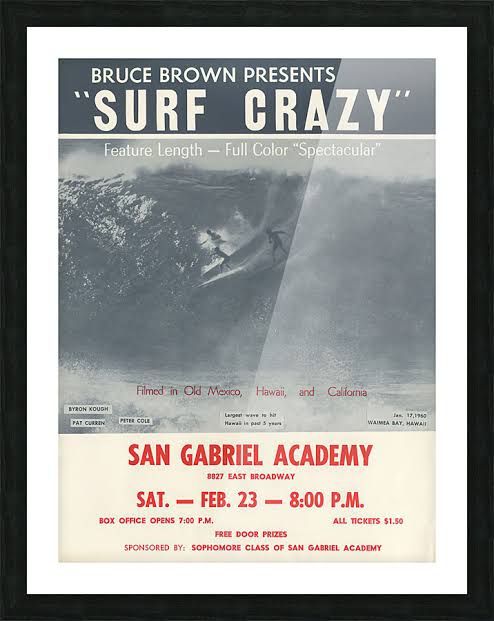
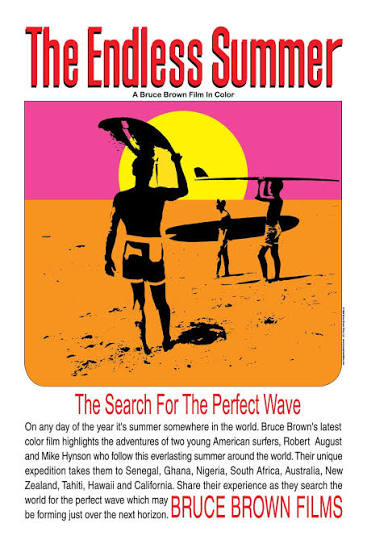
Now Showing
What's playing at the Beach Club this month
Board Care
Pressure Dents
Your knees and feet will leave impressions in the foam over time. Shallow ones are character. Deep ones need filling — resin and patience, sanded smooth.
Scratches
A scratch through the gloss lets water in. Salt water in foam is a slow death. Seal it with a dab of resin, a square of cloth, and a steady hand.
Wax Buildup
Three coats on top of two old ones is not five coats — it is a mess. Strip it down every few weeks and start fresh. The board will thank you. See: The Toolbox.
Ready for the Next Swell
A board that is clean, sealed, and freshly waxed is a board that is ready. Robert checks his the night before. Mike checks his in the parking lot. Both work, but only one feels like a ritual.
Mike's Technique
Mike doesn't paddle for waves. He waits for them. There's a difference, and it's the difference between a duck who surfs and a surfer who happens to be a duck. Mike reads the ocean the way some read newspapers — scanning the horizon, noting set intervals, counting the waves in each pulse, calculating which will be cleanest. Then he lets two pass. Always two. The third one, he says, is the one that's been waiting for you. It's patience dressed up as instinct, and it works.
Surf Cinema
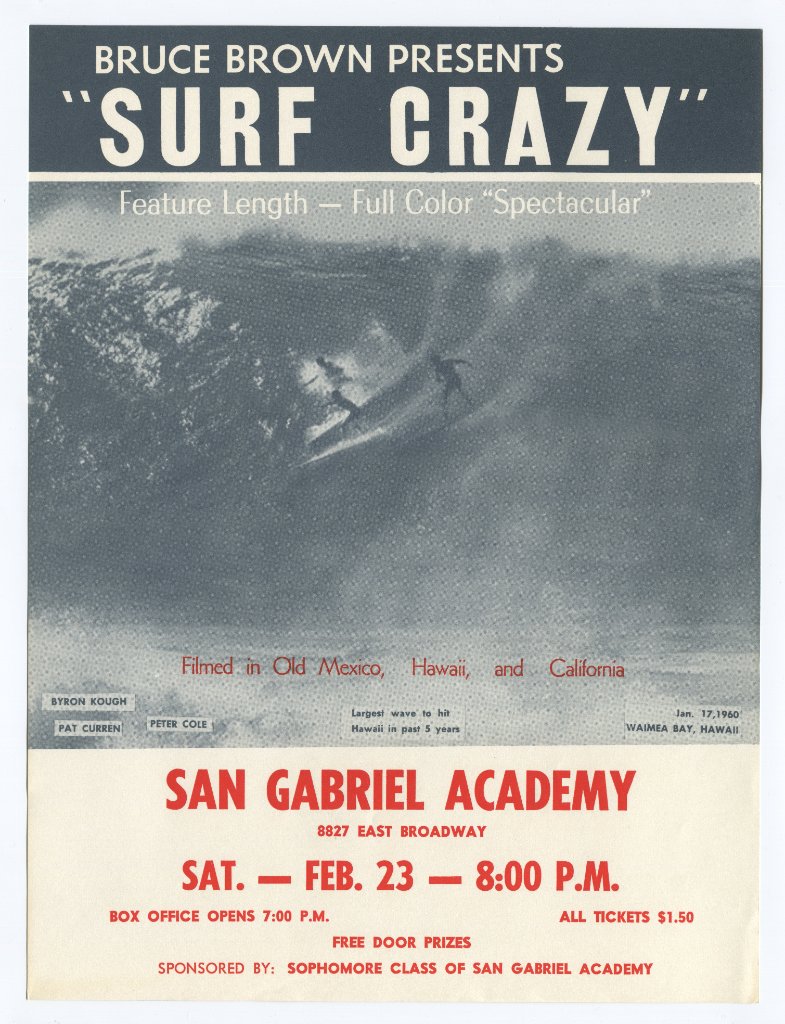
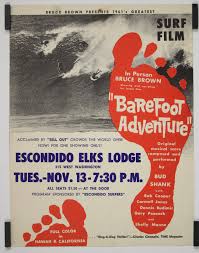
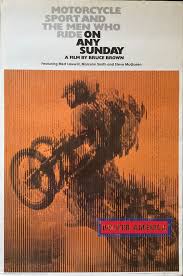
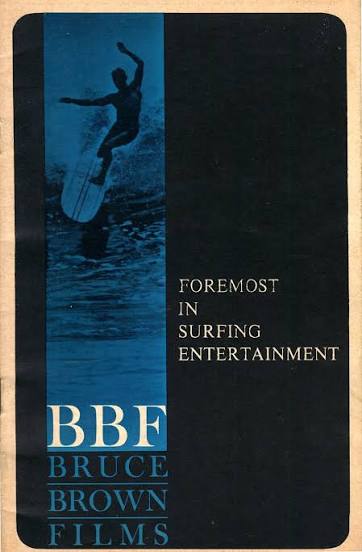
Long before Robert and Mike ever waxed a board, there were the films. Grainy, sun-bleached, set to a guitar soundtrack — they traveled from gymnasium to auditorium, screened for anyone who'd pay a dollar fifty. They didn't just document surfing. They invented the idea that surfing was a life worth living. We tip our hats to the filmmakers who pointed a camera at the ocean and somehow captured freedom on film.
— The Editors
Camp Journal
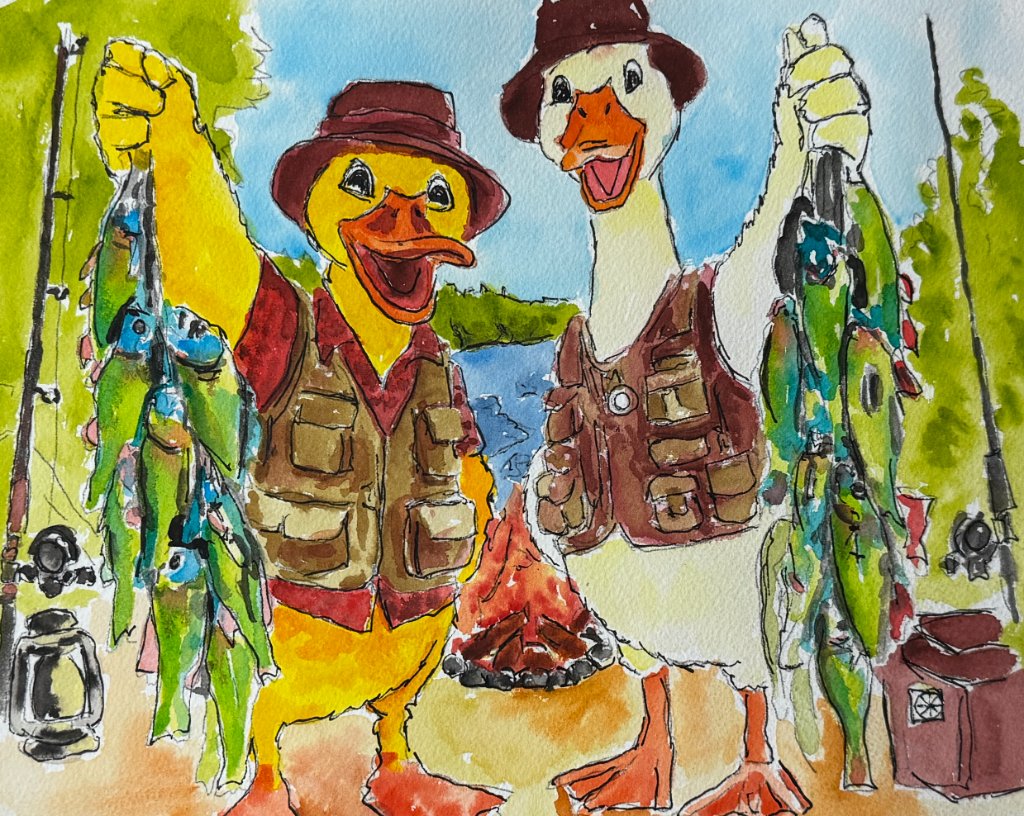
Made camp above the tide line. Fire by seven. Stars by eight. The Milky Way looks different from here — brighter, closer, like you could reach up and grab a handful.
Mike tried to toast a marshmallow. Held it too close to the flame. It caught fire. He blew it out, tried again, and it caught fire a second time. He looked at me. I took the stick.
My marshmallow caught fire too.
Gave up on marshmallows. Cooked the trout we caught this morning over the open coals — nothing but salt and lemon. Mike said it was the best meal of his life. I did not argue.
Dawn patrol. The water is glass. Mike is already out there. He let two waves pass. The third one, he says, is the one that was waiting for him.
— R.
Wish you were here. Mike is the worst. Also the best. Also the worst. — R.
— Robert
The Tiki Incident
A cautionary tale
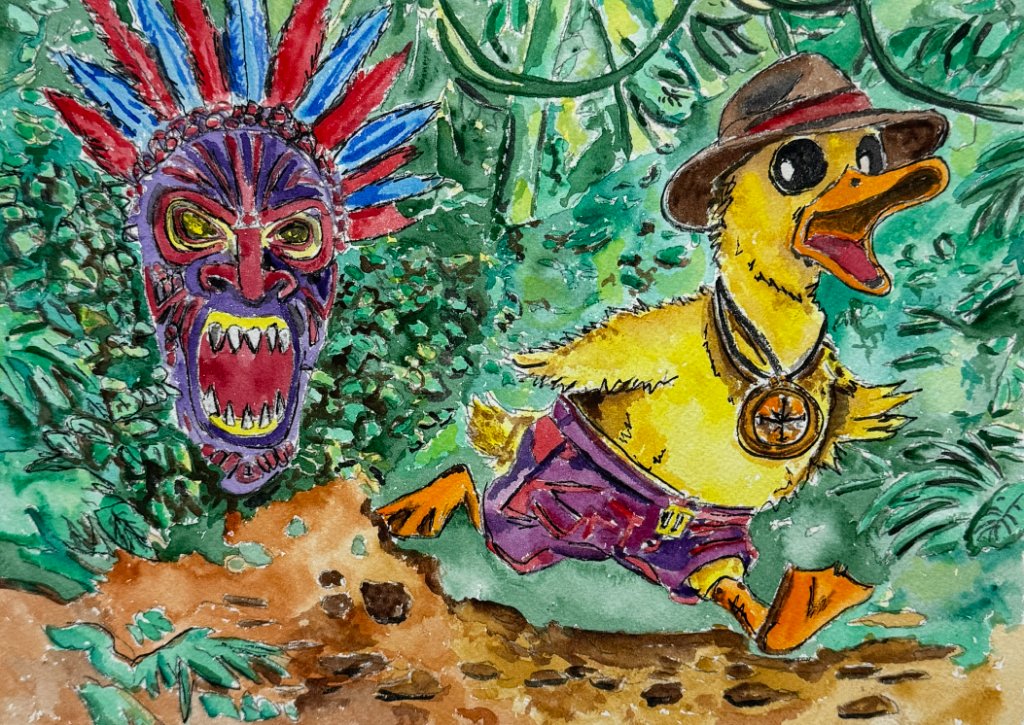
On the last morning, Mike swore he had seen something in the jungle above the beach. Something old. Something carved. Something possibly cursed. Robert, being Robert, went to look. He pushed through the foliage, heart pounding, and found — a tiki. A wooden one. The kind sold at souvenir shops for three dollars. Mike had spotted it the day before and waited twenty-four hours for the right moment. The laughter that followed echoed through the trees and could be heard all the way back at the beach. Robert did not speak to Mike for approximately eleven minutes. When he finally did, he said: That was actually pretty good. Mike beamed. They packed up camp and headed home.
It was a carving. A CARVING. Sold at the gift shop for three dollars. Mike has not stopped laughing. I am not speaking to him. ... Okay. It was funny.
— R.
The Collection
Three Ways to Carry the Journey
Choose the chapter that fits your journey—from one complete destination collection to the full three-destination expedition.
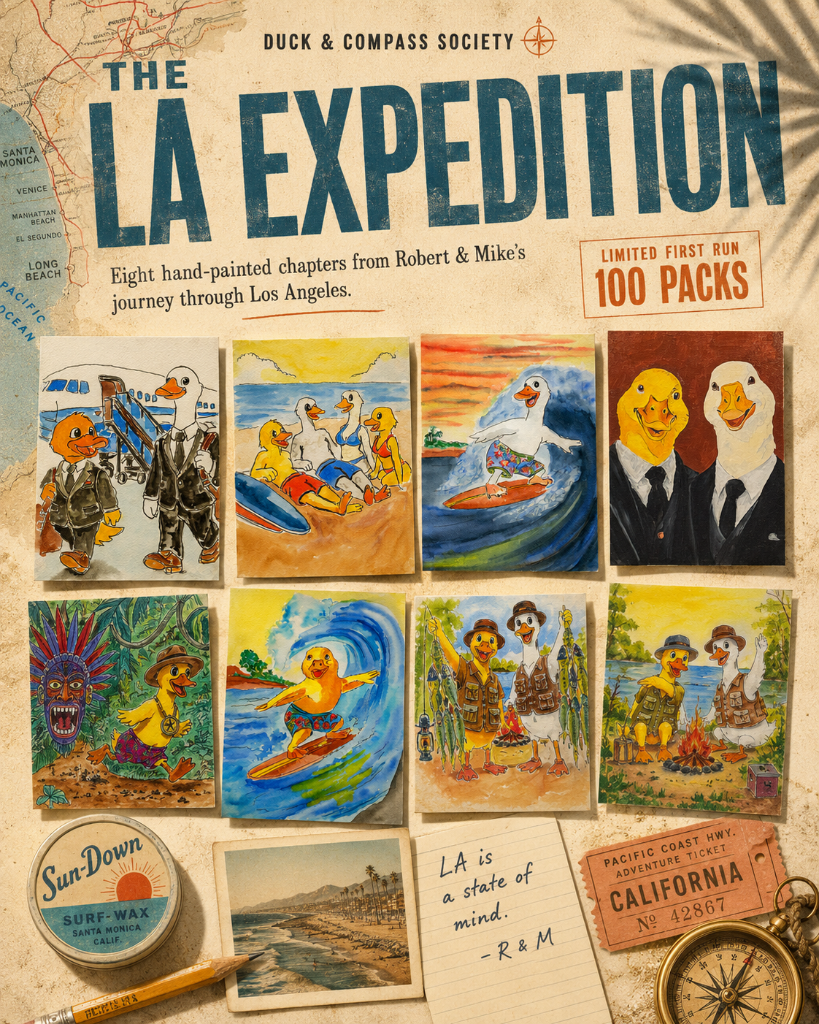
The Los Angeles Expedition
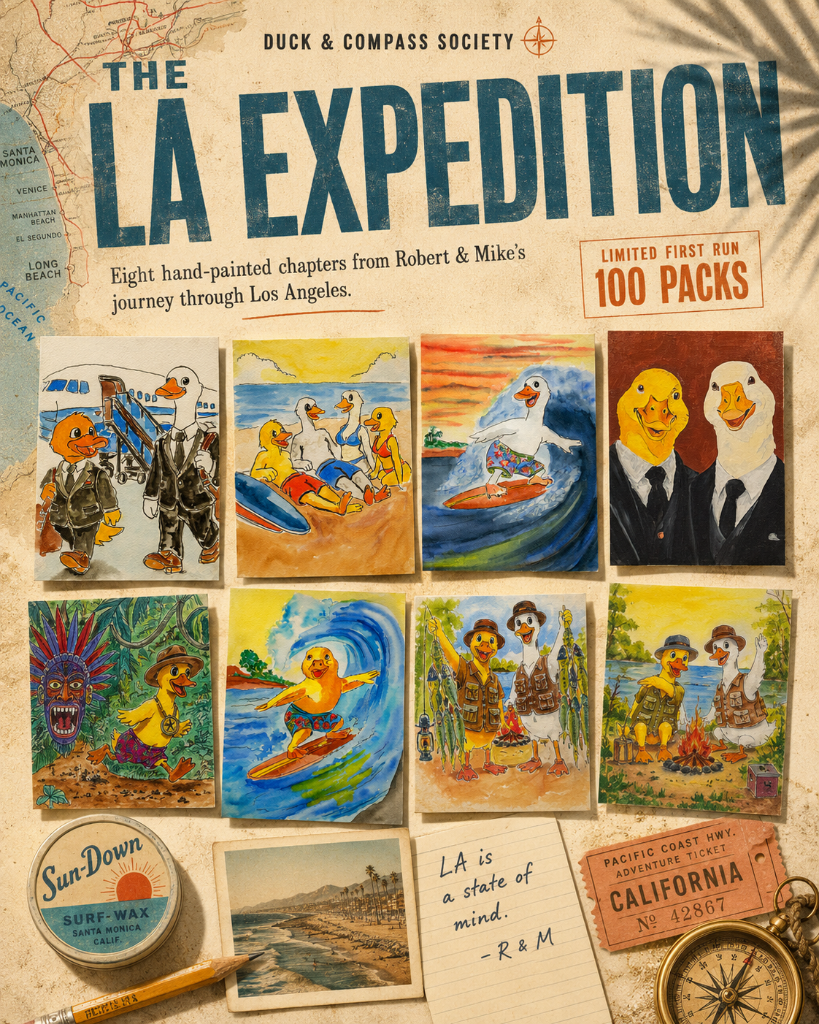
The complete Los Angeles collection—an illustrated journey through arrival, city stories, beaches, surf culture, humor, and Pacific adventure.
Explore the LA Expedition
Example shown: Japan + Los Angeles. Choose any two destinations.
Build Your Explorer’s Bundle
Choose any two complete destination collections from Japan, Los Angeles, and Hawaii.
Build Your Bundle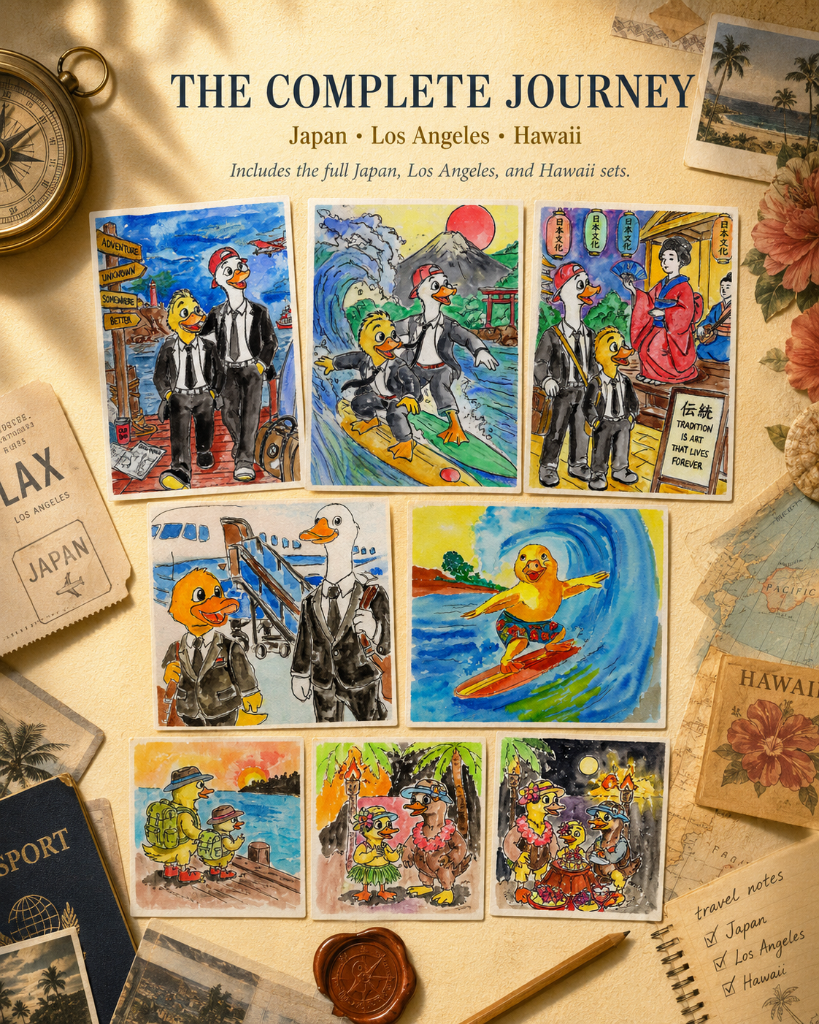
The Complete Journey
Japan, Los Angeles, and Hawaii gathered into one complete illustrated expedition.
Explore the Complete JourneyOriginal artwork. Printed in limited quantities. Packed by hand and shipped with care.