Leaving California
As recorded by R.
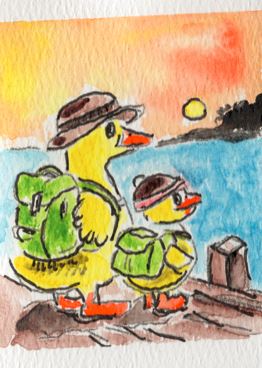
They stood on the pier as the sun went down. Two ducks, two backpacks, one compass that Robert swore still worked. Neither of them had a plan. Neither of them needed one. They had something better — a question that had been growing in the quiet between them for months: I wonder what's over that horizon? The California coast stretched behind them, familiar and golden. Ahead was nothing but water and the slow curve of the earth. Mike looked at Robert. Robert looked at the compass. The compass looked southwest. Mike said: I think we're supposed to go that way. Robert said: I think we've always been going that way. They stepped off the pier and into the boat. The sun sank lower. The water turned to fire. They did not look back. This was the first departure. There would be many more. But this was the one that started everything.
We left California tonight. The sun was setting and the water was on fire. Mike asked if I was scared. I said no. I was lying. But the lying felt like courage, and courage was enough. The compass points southwest. We follow it.
— R.
↳ tap to read
The Hidden Pond
As recorded by R.
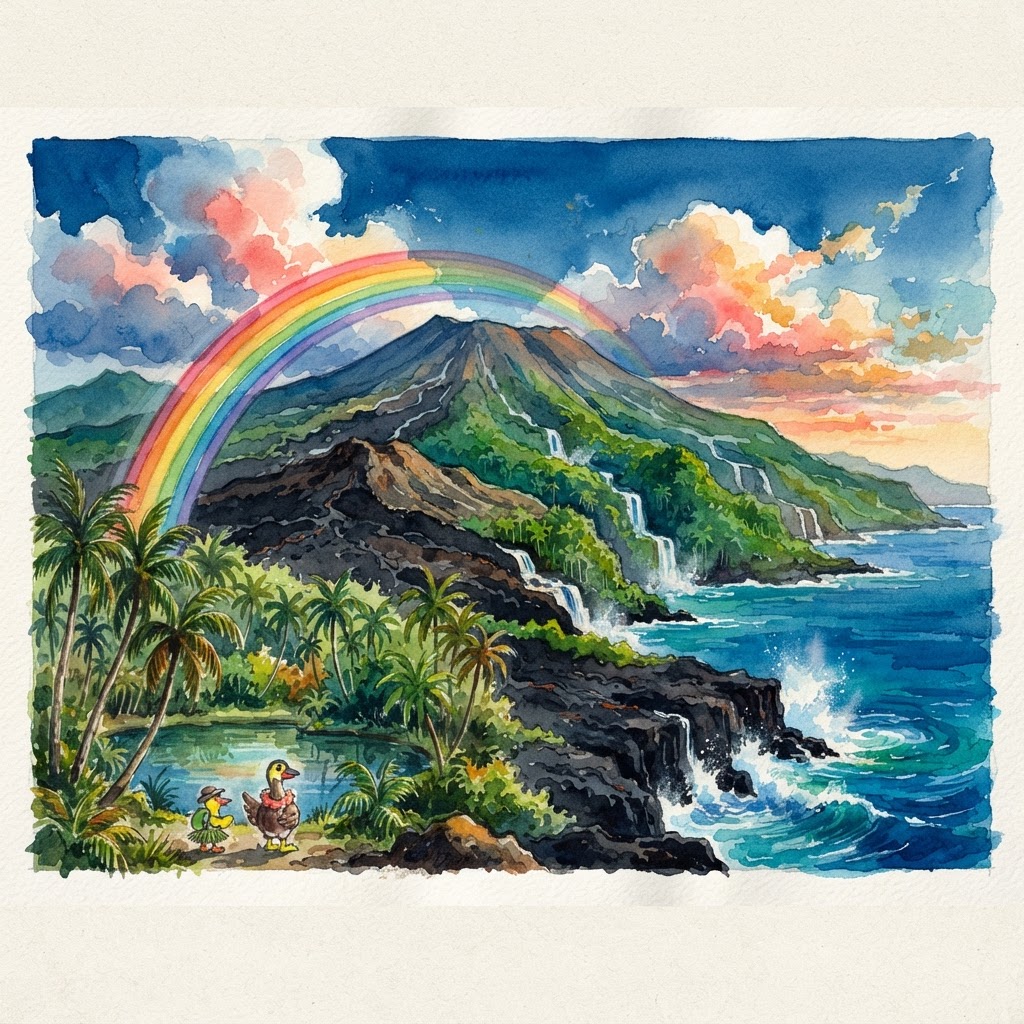
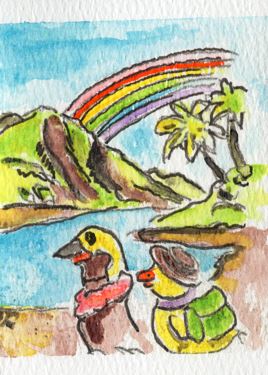
They found it by accident. The trail from the coast led inland through a grove of palms so thick the light turned green. Mike heard the water before Robert did — a sound like someone whispering in a language neither of them spoke. They pushed through a curtain of ferns and there it was: a pond, perfectly still, ringed by dark volcanic rock and green moss. A rainbow arced over the far shore as if it had been painted there that morning. Mountains rose behind it, blue and soft. Two wild ducks already lived there, and they watched the newcomers without alarm. Robert sat on a rock. Mike sat beside him. Neither of them spoke for a long time. The pond did not need words. It had been waiting. This was the first discovery — the moment Robert and Mike understood that the world had secrets worth looking for, and that finding them required nothing but the willingness to walk past the last familiar thing.
Found a hidden pond in the mountains. A rainbow was already there when we arrived. Two wild ducks watched us like we were the strange ones. Maybe we are. I could stay here forever. This is why we left California.
— R.
Hawaii Friend
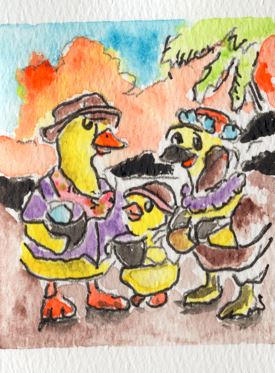
They met him on the second day. He was taller than both of them, brown-feathered, with a calm way of looking at the ocean like he had been reading it his whole life. He wore a lei of flowers and a hat with a blue bloom tucked into the band. Mike, who never hesitates, walked up and introduced himself. The new friend did not ask why two ducks were on his beach. He did not ask where they came from. He asked if they wanted to see the good break. Robert said yes before Mike could. They spent the afternoon together — three birds in the water, trading waves, trading silence, trading the kind of looks that pass between travelers who recognize each other. By sunset he was not a stranger. By sunset he was a Hawaii friend. And Robert understood something that would shape every journey after: that exploration is not about the places you find. It is about the people who find you there.
Every friendship begins with a question.
The reef does not care about your feet.
Shave ice before it melts.
Island time is not slow — it is honest.
The best discoveries are the ones you almost missed.
The sun sets fast in the islands.
New Friend
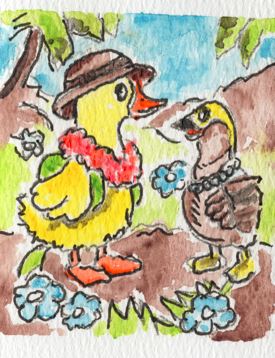
He appeared on the trail the next morning — a brown bird with a long neck and a quiet way of moving through the trees. He wore nothing but a lei and a look of total calm. Robert, who had been sketching the palm grove, looked up. The new friend looked back. Neither of them said anything for a full minute. Then the brown bird pointed at Robert's sketchpad and nodded once, slowly, the way you nod when you recognize something true. Robert showed him the drawing. The new friend showed him a shell he had been carrying. They traded. Robert gave the sketch. The new friend gave the shell. Mike, watching from the path, said: you two are going to be trouble. He was right. But it was the good kind. That shell would sit on Robert's desk for the rest of his life. It was the first trade. There would be many more.
Robert's Read
Robert learned to read the ocean by leaving California. Not because California taught him nothing — it taught him everything. But it was not until the coast disappeared behind the boat that he understood what watching really meant. In California, he watched waves to catch them. In Hawaii, he watches waves to understand them. The difference is the difference between taking and receiving. Robert sat on the beach for forty minutes that first morning. He counted sets. He read the intervals. He noted which waves stayed open and which closed out. Mike paddled out immediately and caught nothing. Robert waited. The wave he caught was worth every second. This, Robert wrote, was where the Society really began — not on the pier in California, but on this beach, learning to look before leaping. Every generation of explorers, he said, should leave better notes for the next. So here are his.
Luau
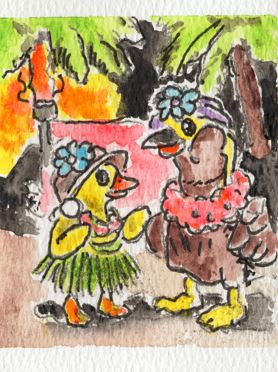
The invitation came from their Hawaii friend. He said one word: luau. They did not know what it meant. They learned. By nightfall the beach was alive with fire and music and the smell of something roasted until the skin crackled. Mike wore a grass skirt over his suit and did not seem to find this unusual. Robert wore a lei of flowers. The palm fronds overhead caught the firelight and threw green shadows on the sand. Someone played a ukulele. Someone else played a guitar. The food kept coming — pork from the underground oven, poke, poi, sweet potatoes wrapped in leaves. Mike ate until he could not move. Robert ate until he could not stop talking. Their new friend sat between them, laughing at both. The moon rose. The fire burned. The ocean kept its rhythm. It was, Robert wrote later, the best evening of his life. And it was the evening the Duck & Compass Society was truly born — not with a charter or a plan, but with a feast, a fire, and the sound of friends laughing under a moon that did not care what time it was.
Luau. I did not know the word before tonight. Now I will never forget it. Mike wore a grass skirt. I wore flowers. Our new friend laughed at us. It was the best kind of laughter. I think this is how all societies should begin. — R.
— Robert
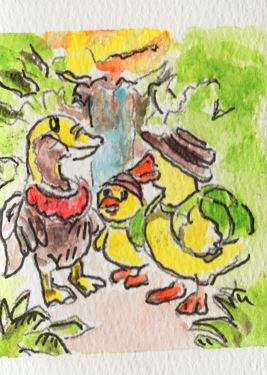
Wish you were here. The trail goes through the greenest forest I have ever seen. The mountain is bigger than everything. Our friend says it is still growing. — R.
— Robert
The Trail
As recorded by R.
The trail began where the road ended. Three of them — Robert, Mike, and their Hawaii friend — walked single-file into the green. The canopy closed above them and the light went soft and filtered, the color of jade. The path was packed dirt, smoothed by a thousand feet that had walked it before. Their friend pointed out plants Robert had never seen — broad-leafed, flowering, fragrant. Mike carried the backpack and complained cheerfully about the weight. The forest opened into a clearing, and there it was: the mountain, rising green and enormous against the sky, a path of pale stone leading up its flank. Their friend stopped and said: The mountain was here before the ocean. The ocean was here before the island. Respect what came first. Mike went quiet. Robert wrote it down. They climbed. And Robert understood that this was the real lesson of the first expedition — not that the world was full of things to see, but that the world was full of things that had been here long before you, and would be here long after. The best an explorer can do is listen, write it down, and leave better notes for the next one.
The trail through the forest. Our friend showed us the way. The mountain was here before the ocean. I wrote it down because I did not want to forget it. Mike said the volcano made him feel small. He meant it as a compliment.
— R.
↳ tap to read
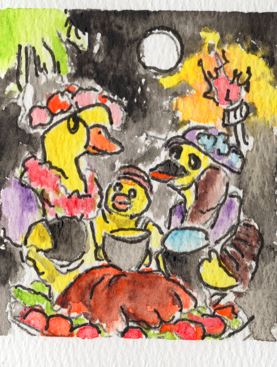
Porky — The Feast Journal
The imu is uncovered. The earth opens and steam rises smelling of pork and banana leaf. Three of us around the pit. The moon is full and white. Mike is already drooling.
Our friend carved the roast with a calm that suggested he had done this a thousand times. Mike watched like a student. I watched like a hungry duck. Both were valid.
Mike ate more than I thought possible. Our friend laughed. The moon climbed higher. The tiki torch on the beach threw orange light on the sand and the palms.
The ukulele came out. Our friend played something slow. The waves kept time. Mike fell asleep on the sand with a piece of pork still in his wing.
The fire is low. The moon is high. Our friend is still playing. I do not want this night to end. But it will. And that is what makes it matter.
— R.
Hawaii Friend
↳ tap to read
Long before Robert and Mike ever set foot on Hawaiian sand, they had each other. Two ducks, one compass, and a shared habit of walking into the unknown. But the islands taught them something California and Japan had not: that friendship is not just about who you travel with. It is about who finds you when you arrive. Their Hawaii friend appeared on the second day — tall, calm, brown-feathered, carrying a shell and a silence that felt like home. He did not ask where they came from. He did not ask why. He asked if they wanted to see the good break. That question, Robert wrote later, was the best anyone had ever asked him. We tip our hats to the friends who find you in a place you have never been and make it feel like you have always been there. Every generation of explorers leaves better notes for the next. This is ours.
— The Editors
Setting Sail
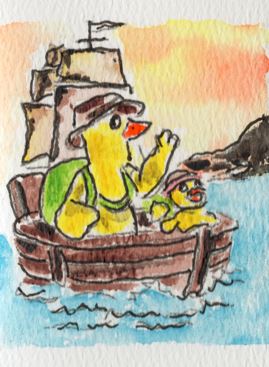
The final chapter
On the last evening, they pushed the boat back into the water. The sun was dropping fast — Hawaiian sunsets do not linger — and the sea turned from blue to gold to fire. Their Hawaii friend stood on the shore and raised one wing. Robert raised his. Mike was already adjusting the sail. The wind caught it and the boat began to move. The island shrank behind them, slow and golden, the palms becoming silhouettes, the mountain becoming a shadow. Robert looked back. Mike looked ahead. The compass pointed northeast — toward home, toward California, toward whatever came next. The water was warm. The light was gold. The sail was full. They were setting sail, and the ocean, as always, was ahead of them. But something was different now. They were not the same two ducks who had stood on that pier. They had found a hidden pond. They had made a friend. They had eaten under a moon. They had climbed a mountain that was older than the sea. They had begun. And the compass, Robert noticed, was no longer just pointing the way. It was pointing the way forward.
Setting sail for home. The island is behind us now. Our friend stood on the shore until we could not see him anymore. Mike says that is how you know a friendship is real. I think he is right. The compass points home. The ocean points everywhere. This was the first expedition. There will be more.
— R.
The Collection
Three Ways to Carry the Journey
Choose the chapter that fits your journey—from one complete destination collection to the full three-destination expedition.
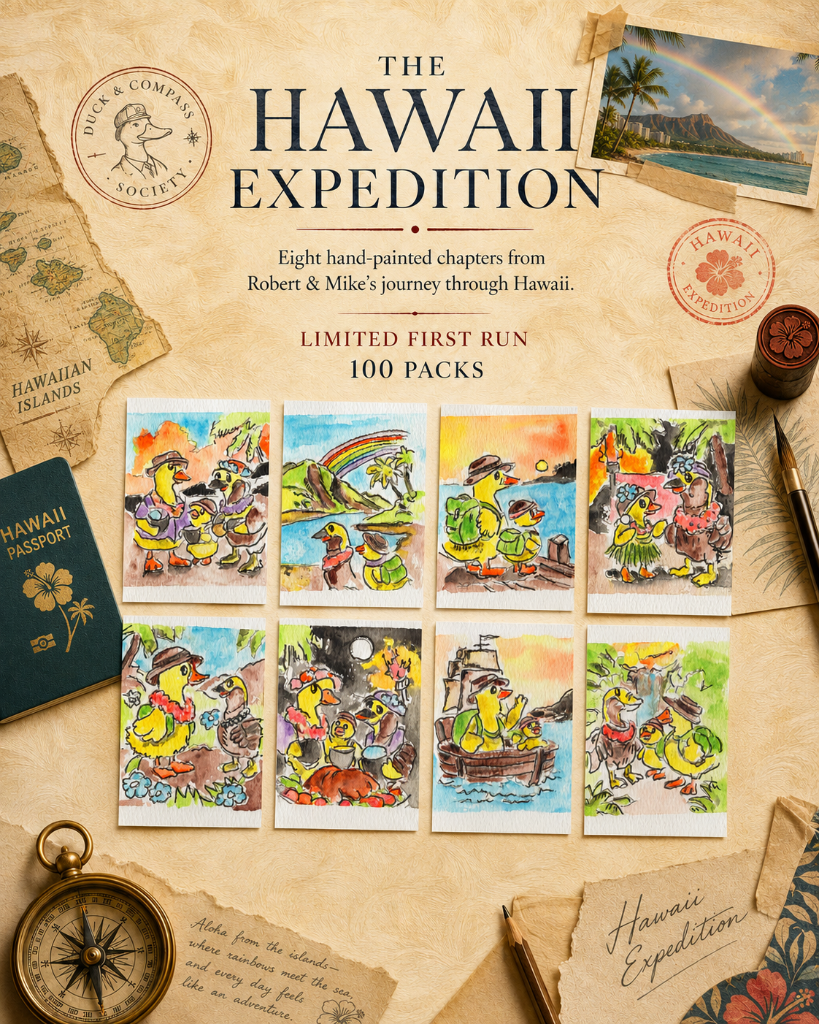
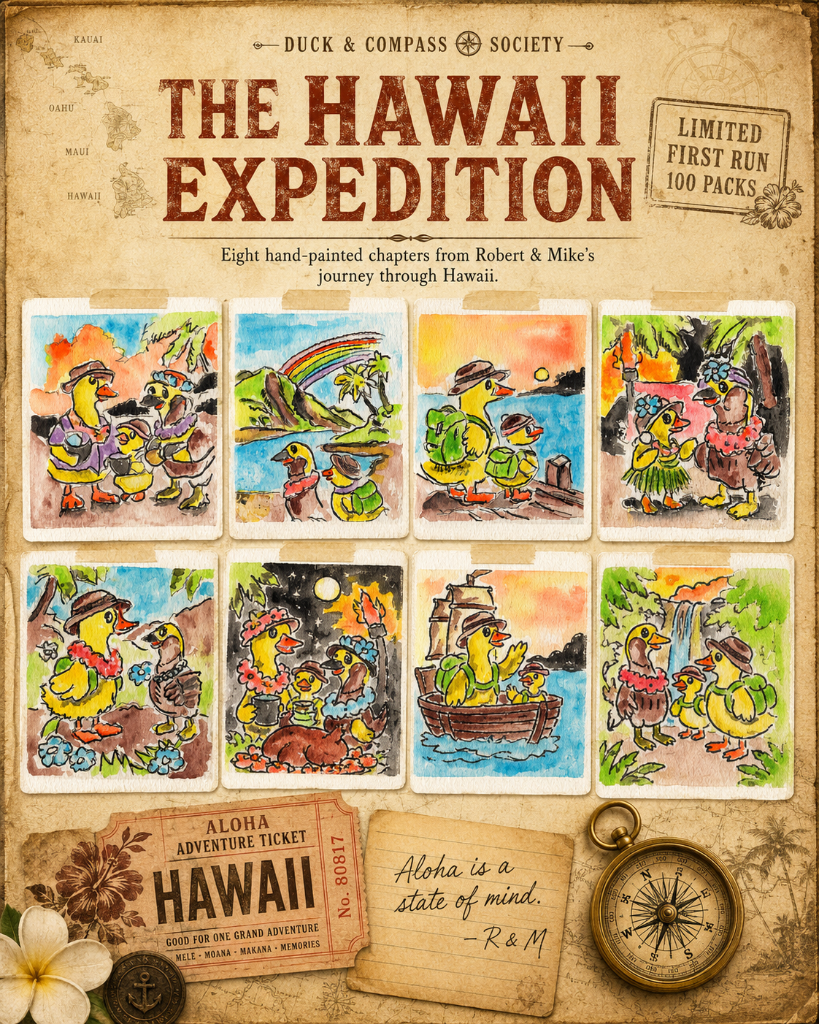
The Hawaii Expedition
The complete Hawaii collection—original watercolor stories shaped by ocean life, volcanic landscapes, island traditions, friendship, and discovery.
Explore the Collection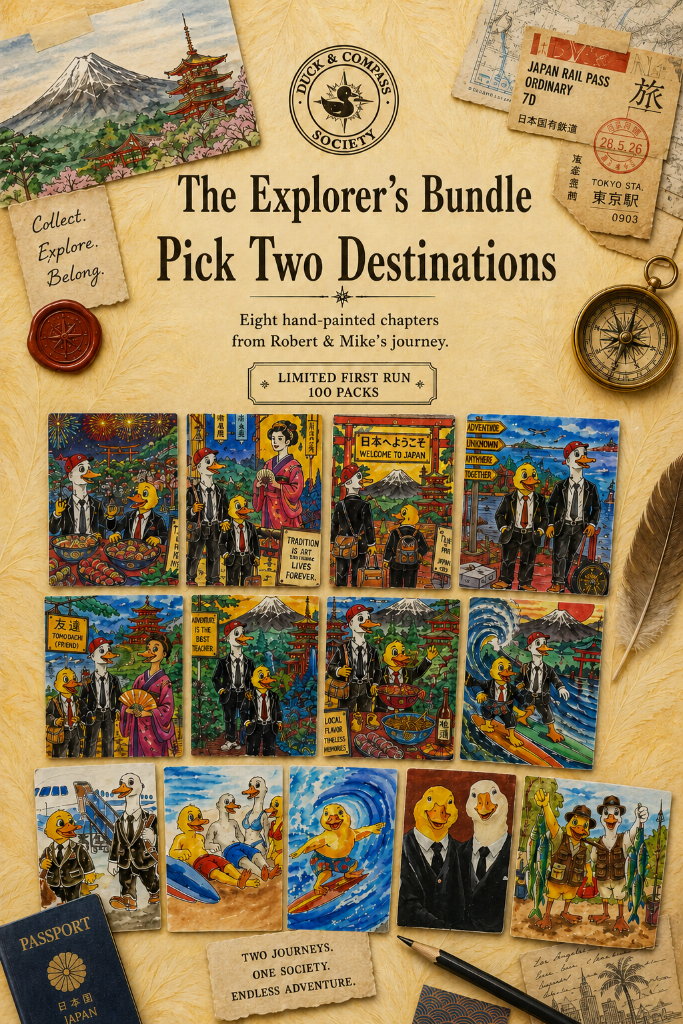
Example shown: Japan + Los Angeles. Choose any two destinations.
Build Your Explorer’s Bundle
Choose any two complete destination collections from Japan, Los Angeles, and Hawaii.
Build Your Bundle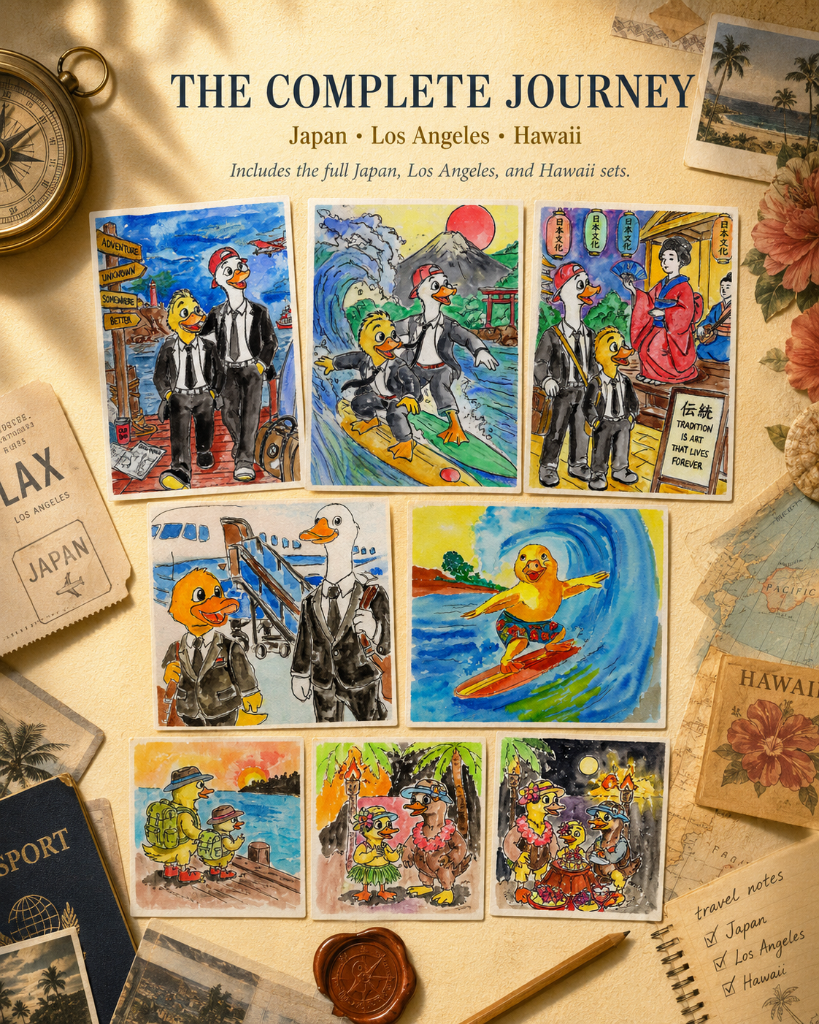
The Complete Journey
Japan, Los Angeles, and Hawaii gathered into one complete illustrated expedition.
Explore the Complete JourneyOriginal artwork. Printed in limited quantities. Packed by hand and shipped with care.