Original Watercolor · Study
Curatorial Introduction
A Collection Shaped by Ocean, Volcano, and Culture
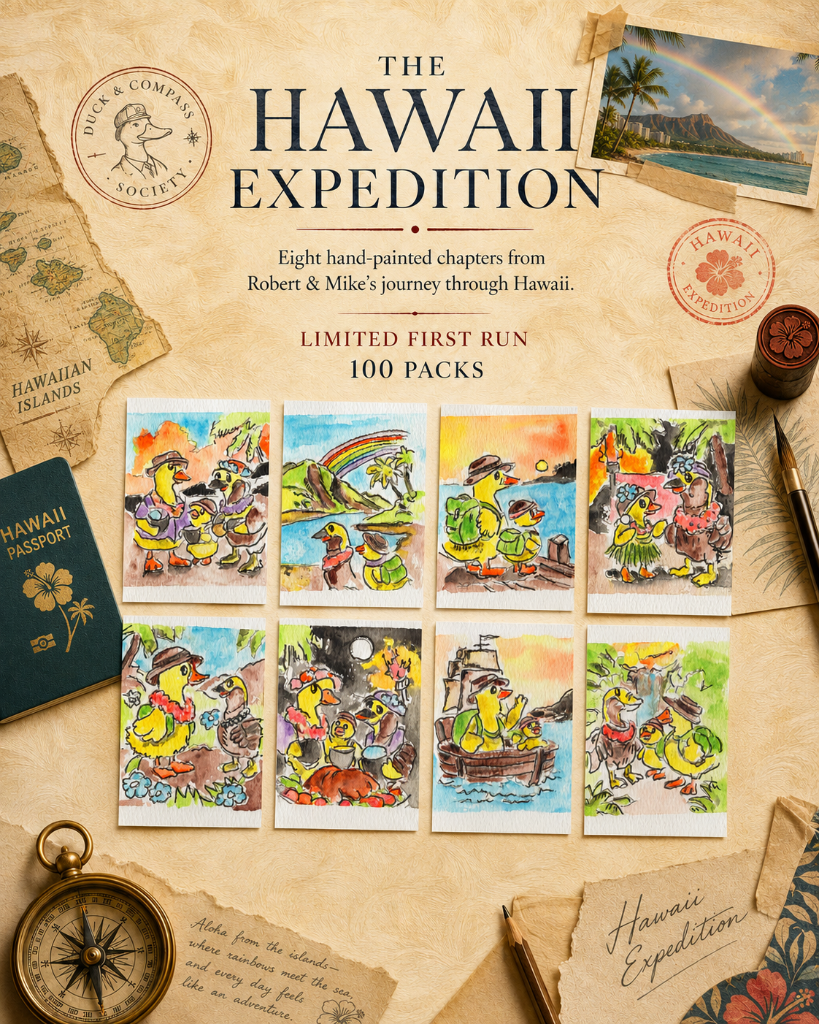
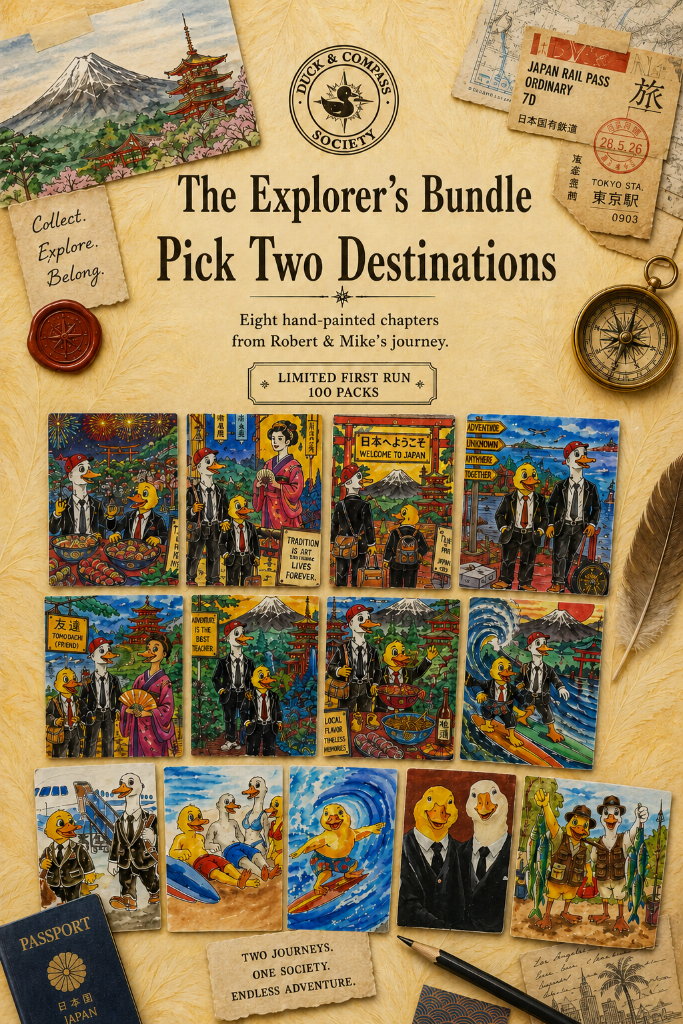
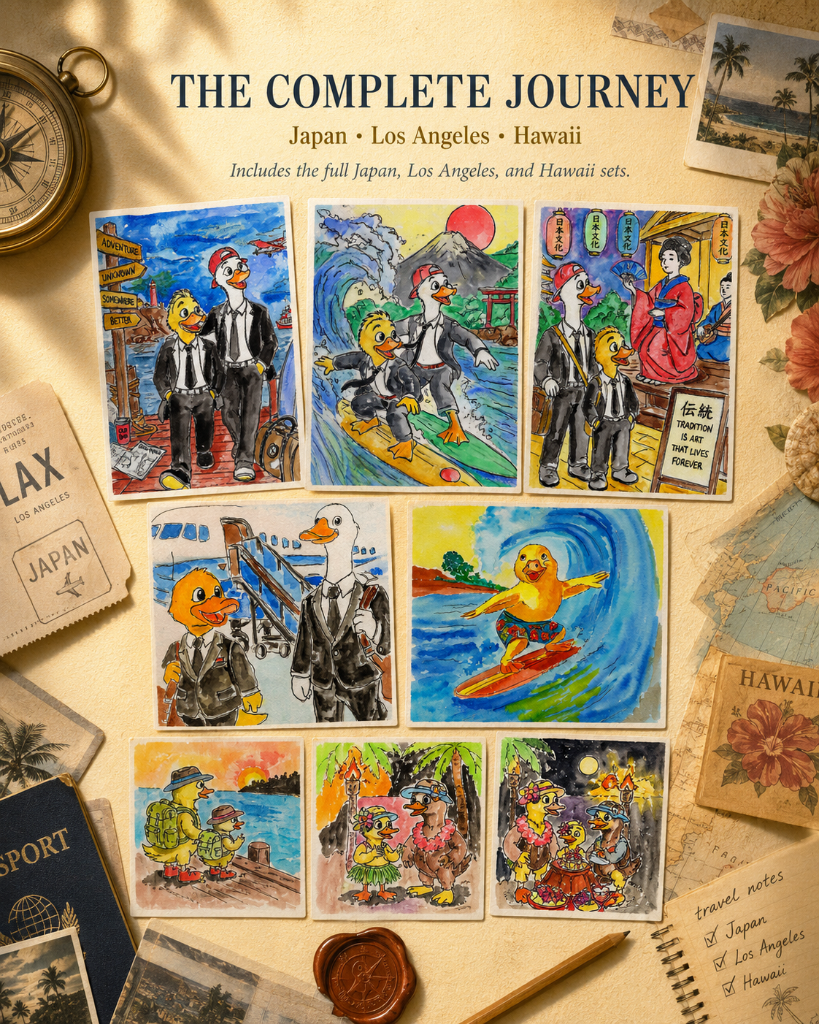
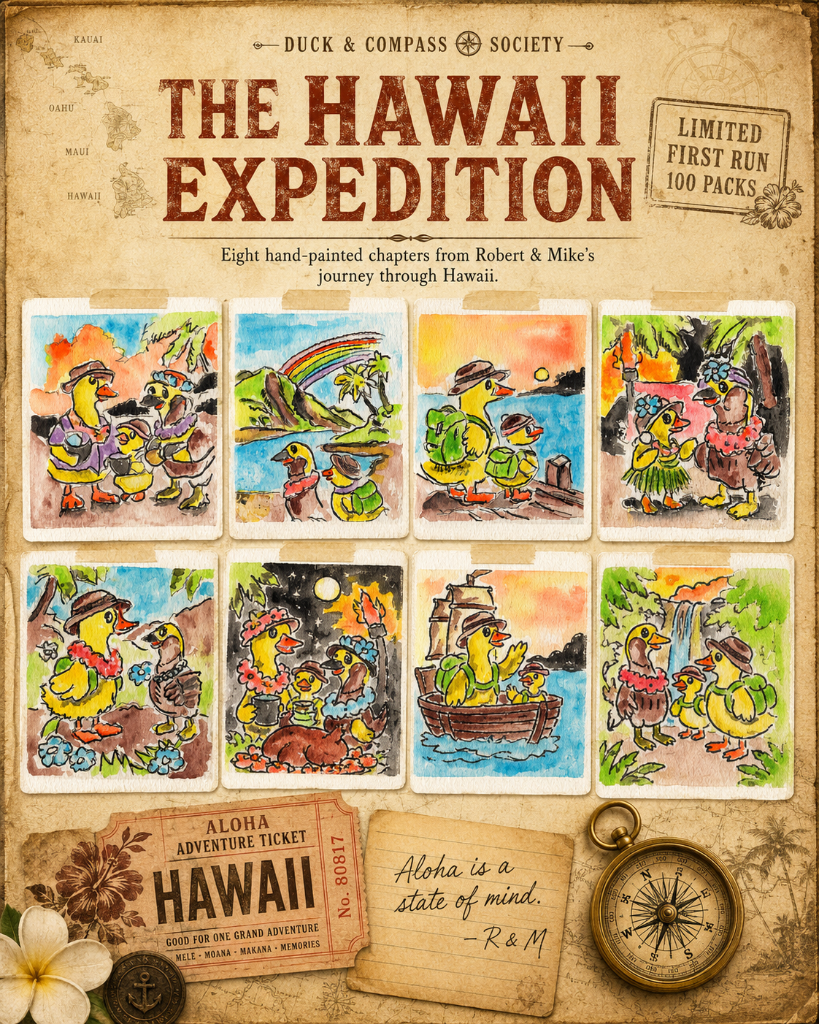
The Hawaii Gallery presents the original watercolors behind the Hawaii Expedition—a collection inspired by the experience of military families living among the islands.
The paintings explore the Pacific as a living presence: the ocean that surrounds, the mountains that rise from the sea, the trails that move through tropical forests, and the culture that has navigated these waters for centuries.
The gallery traces the creative process from early landscape studies through final packaging, making visible the care behind every card.
“Hawaii is not a backdrop. It is a living place with a story far older than the canvas.”
Original Artwork Exhibition
The Paintings
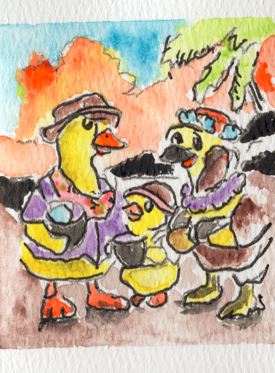
Plate 01
Hawaii Friend
The collection opens with warmth and welcome. Floral leis painted in layered washes of tropical pigment.
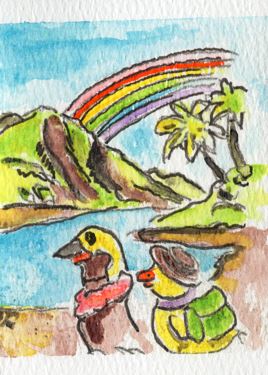
Plate 02
Hidden Pond
A landscape study. The rainbow required careful wet-on-wet technique to achieve soft color transitions.
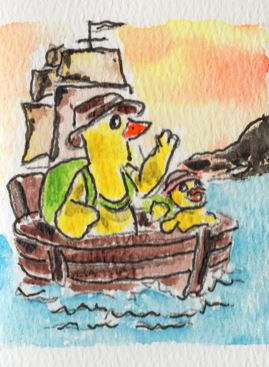
Plate 03
Setting Sail
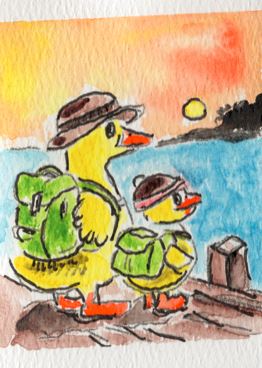
Ocean movement rendered in layered blues. The sunset palette required multiple glazes to build depth.
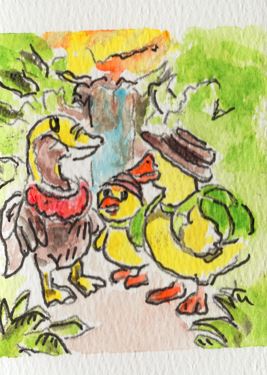
Plate 04
The Trail
Tropical greenery built from multiple pigment layers. The waterfall was painted last to preserve its luminosity.
Story Behind the Collection
From the Pacific to the Shore
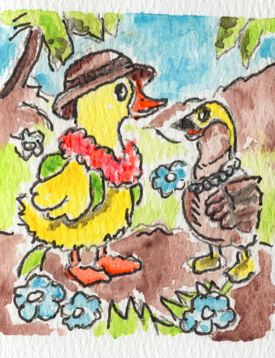
The Hawaii collection follows Robert and Mike through the experience of crossing the Pacific and building a life among the islands.
Each scene was chosen to honor a different dimension of Hawaii: the ocean crossing, the windward coast, the traditions of navigation, the surf, the trails, the food, the friendships.
The narrative arc moves from arrival through understanding, always with respect for the culture and place that make Hawaii unique.
“To paint Hawaii is to listen before drawing.”
Pencil construction lines visible beneath the paint
Sketches and Early Development
Studying the Shape of Islands
The Hawaii collection began with landscape studies: the steep ridgelines of the Koʻolau mountains, the curve of Kāneʻohe Bay, the movement of water over volcanic rock.
Thumbnail sketches explored how to place Robert and Mike within landscapes that are already dramatic. The challenge was letting the land lead, with characters as visitors rather than centerpieces.
The pencil construction lines beneath each painting reveal how compositions were built around the land rather than imposed upon it.
“The islands were drawn before the characters were placed.”
Watercolor and Ink Process
Tropical Pigments and Ocean Blues
The Hawaii collection required a palette of deep ocean blues, tropical greens, volcanic charcoals, and sunset golds. Each color was mixed to reflect the intensity of island light.
Ocean scenes used wet-on-wet washes to capture the transparency and movement of water. Forest scenes layered multiple greens to build the density of tropical foliage.
The visible brushwork and pigment pooling are the qualities that make each painting feel alive and hand-made.
“The ocean in watercolor moves the way the ocean moves.”
Character and Composition Decisions
Visitors in a Living Landscape
In the Hawaii collection, Robert and Mike are often placed as visitors within a landscape that predates them. They stand on piers, sail small boats, walk forest trails—always with the land and sea as the primary subjects.
This compositional decision reflects a core value of the collection: Hawaii is not a backdrop for the characters. The characters are guests in Hawaii.
The placement, scale, and posture of Robert and Mike were chosen to convey respect, curiosity, and humility.
“The land was here first. The painting should acknowledge that.”
Paper, Printing, and Color
Carrying Island Color Onto Card
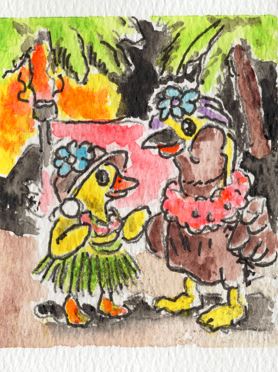
After each painting was complete, it was scanned at high resolution to preserve the deep blues, tropical greens, and warm golds of the original watercolors.
The reproductions are printed on premium card stock chosen for its ability to hold the saturated colors that define the Hawaii palette.
Each print is checked against the original to ensure the reproduction carries the same depth and warmth.
“The print should carry the weight of the ocean.”
Hand Finishing
The Hand in Every Pack
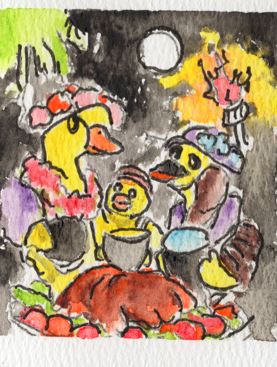
Each printed card is hand-finished in the studio. Edges are inspected, color is verified, and an embossed mark is pressed into the stock.
The tactile details—the weight of the card, the impression of the embossment, the texture of the paper—are what make the object feel collectible rather than manufactured.
Every card is individually held and checked before entering a pack.
“What the hand touches, the hand remembers.”
Packaging and Wax Sealing
An Archive of the Islands
Each Hawaii pack is assembled by hand. Cards are placed in protective sleeves with archival tissue. A handwritten label identifies the collection.
The pack is sealed with wax, creating a moment of ceremony when the collector opens the journey.
The packaging is designed to feel like a small archive of island life—protective, intentional, and personal.
“Opening the seal should feel like arriving.”
Artist’s Reflection
What the Hawaii Collection Became
The Hawaii Expedition began as an attempt to honor the experience of living among islands that are geologically alive, culturally deep, and visually overwhelming.
Through painting and careful composition, that attempt became a series of cards that move from ocean crossing through island life, always with respect for the place and its people.
The hope is that collectors will see not just illustrations of Hawaii, but evidence of a person’s effort to understand and respect a place through art.
“To paint a place is to promise you were paying attention.”
Carry the Collection Home
Continue to the Expedition
Each gallery journey concludes with the same three pathways into the collectible collections.