Original Watercolor · Study
Curatorial Introduction
A Collection Shaped by Culture and Observation
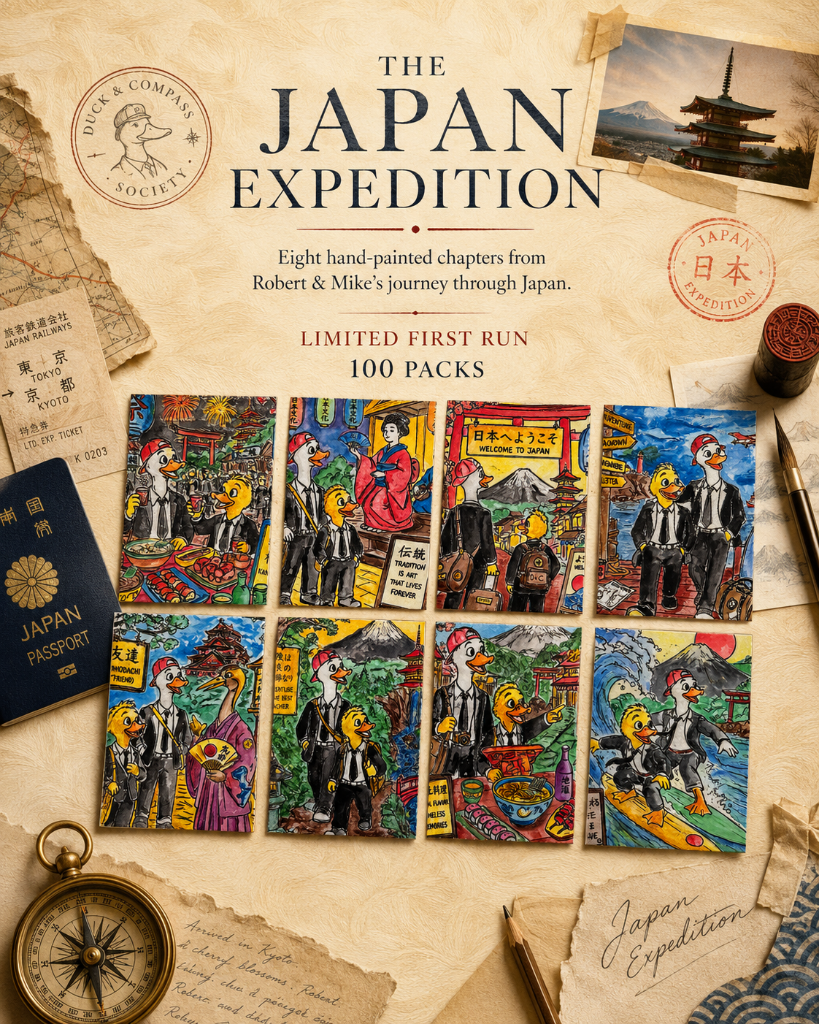
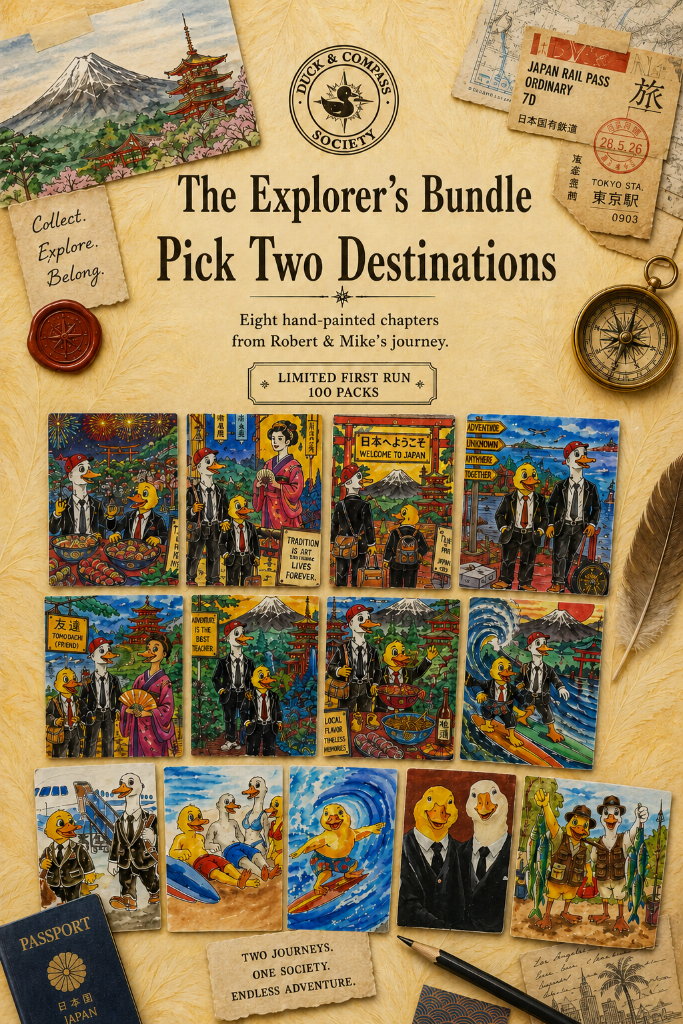
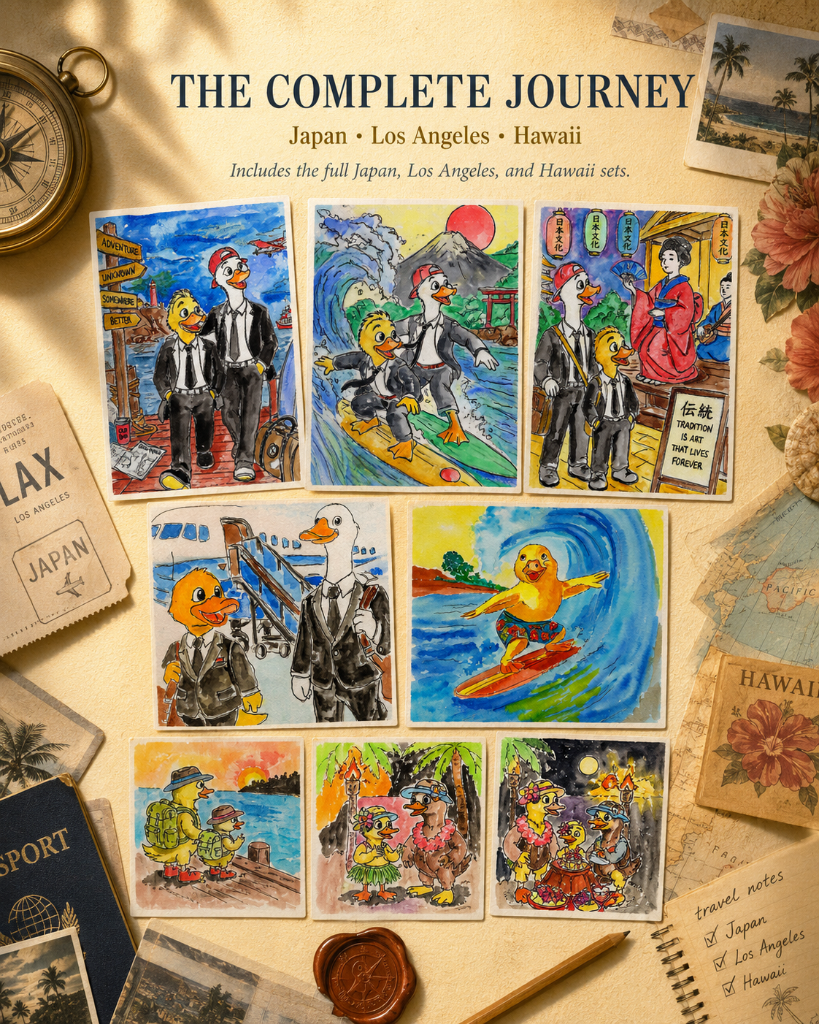
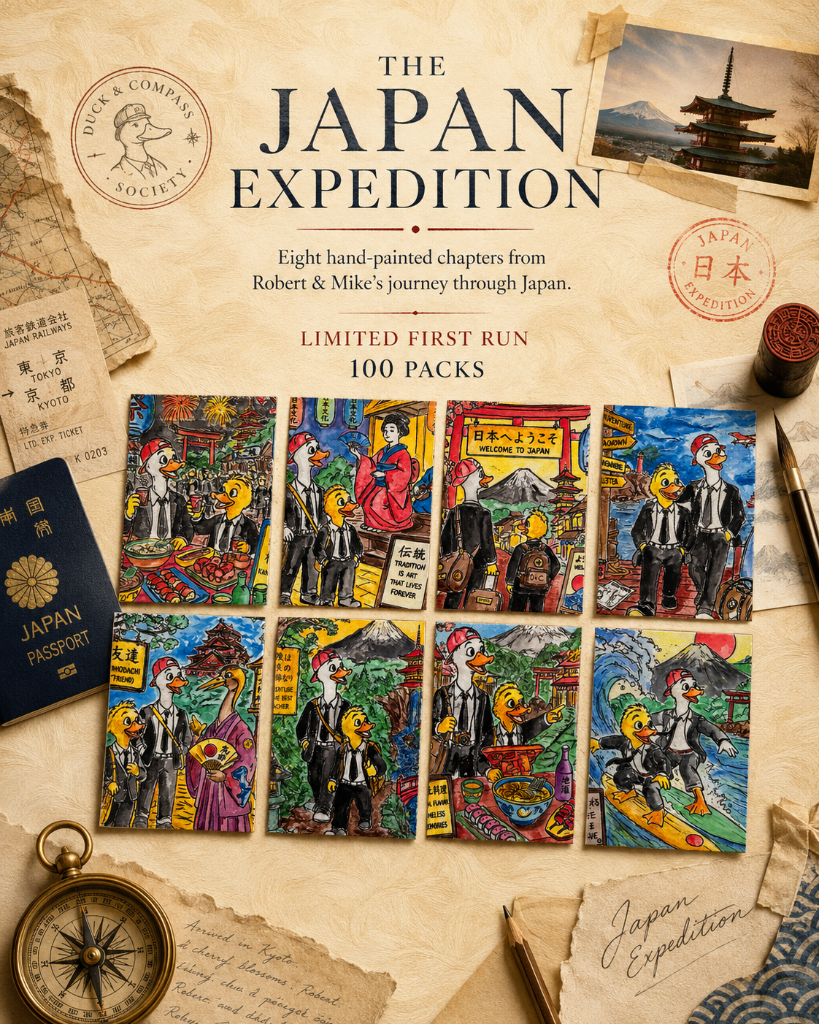
The Japan Gallery presents the original watercolors behind the Japan Expedition—a collection inspired by the experience of military families discovering Japan through culture, friendship, food, tradition, and adventure.
Each painting was created to honor the feeling of a place rather than simply depict it. The architecture, landscape, color, and atmosphere of Japan shaped every compositional decision.
The gallery traces the creative process from early research through final packaging, making visible the hand, eye, and care behind every card in the collection.
“The goal was never to illustrate Japan. It was to preserve the feeling of discovering it.”
Original Artwork Exhibition
The Paintings
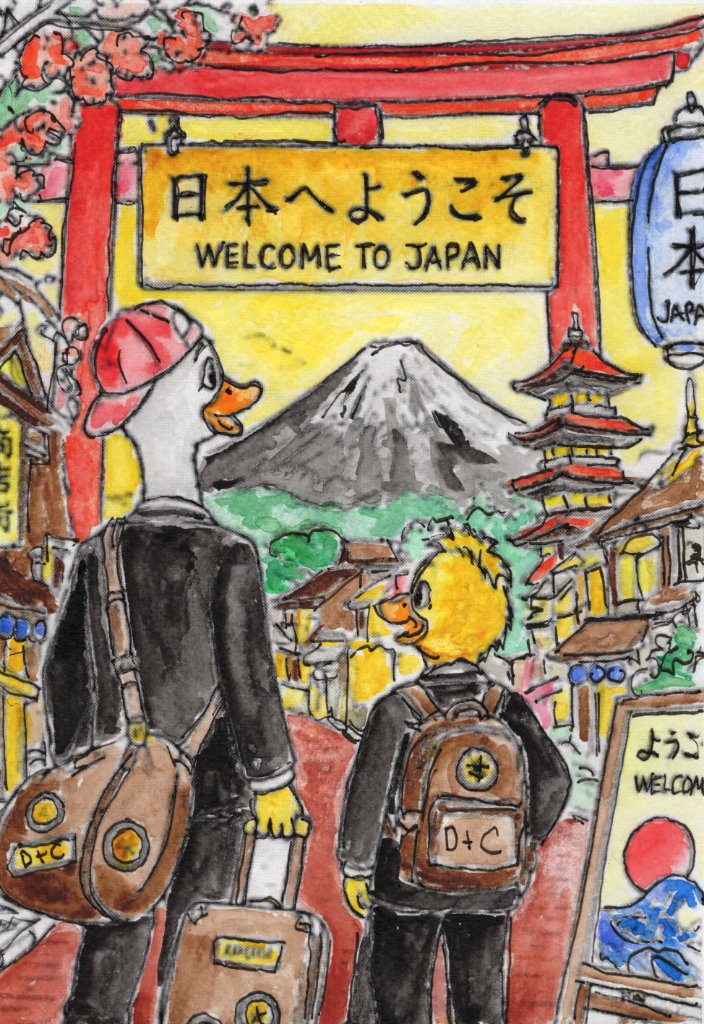
Plate 01
Welcome to Japan
The first painting in the Japan collection. Torii gate, Mount Fuji, and the moment of arrival rendered in layered watercolor washes.

Plate 02
Arrival
Composition built around a harbor scene. Pencil construction lines visible beneath the paint reveal the artist’s process.
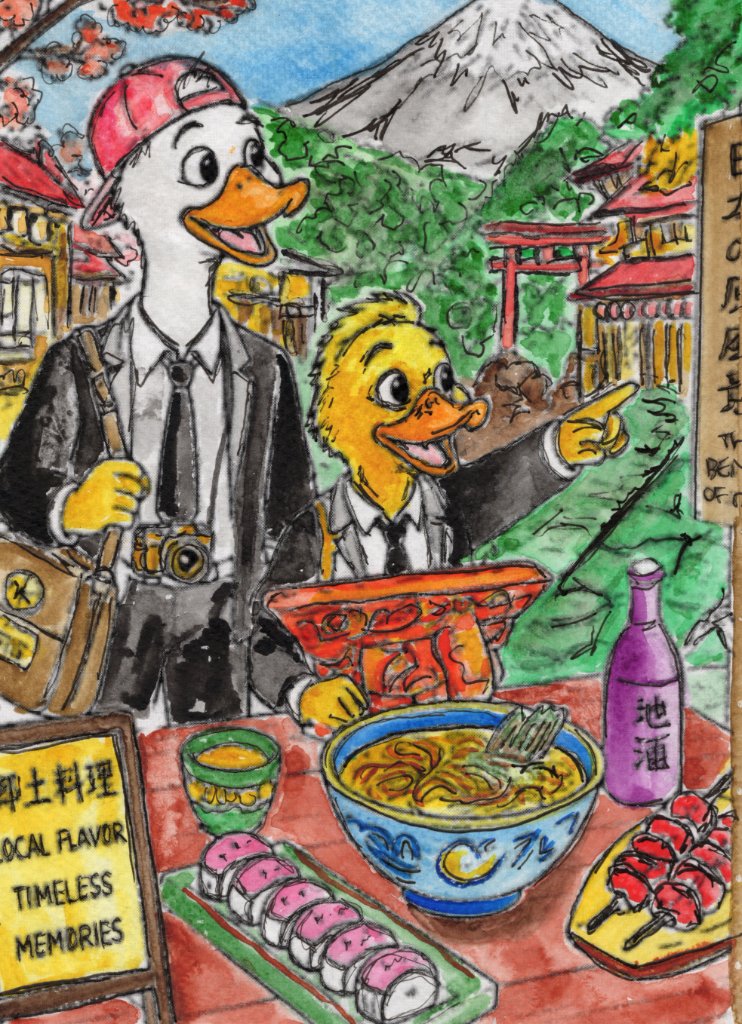
Plate 03
Dinner Theatre
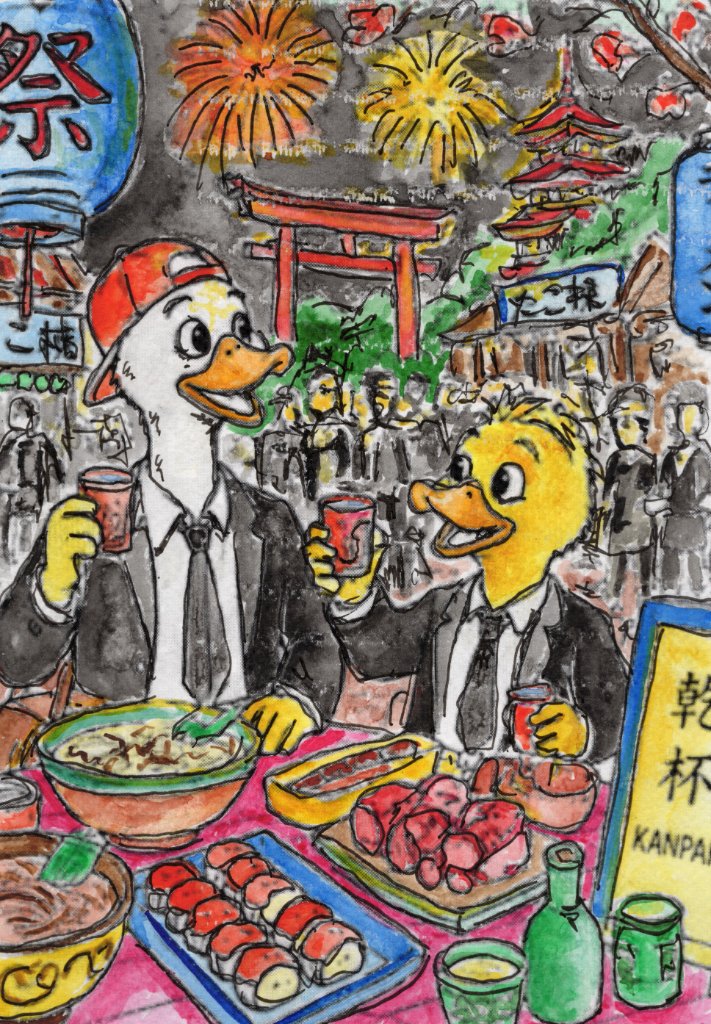
Warm color palette chosen to evoke the feeling of shared meals. Mount Fuji placed as a compositional anchor.
Plate 04
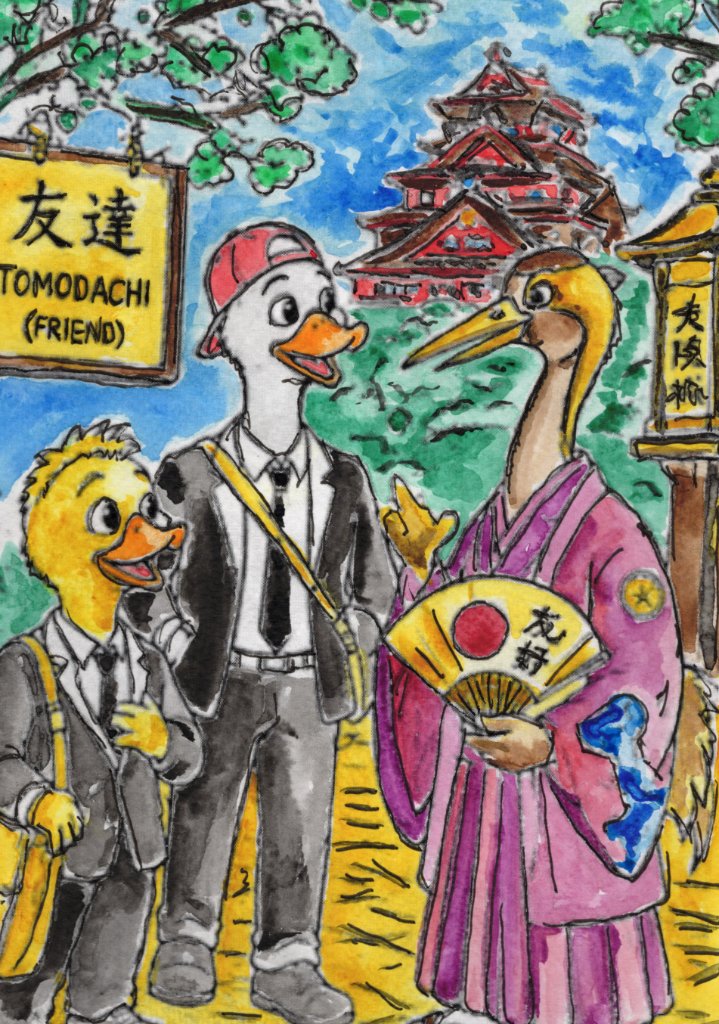
Friend
Character placement carefully composed to convey welcome and connection. Architectural detail drawn in ink before painting.
Story Behind the Collection
From Arrival to Understanding
The Japan collection follows Robert and Mike through the experience of arriving in a new country and gradually learning to see it.
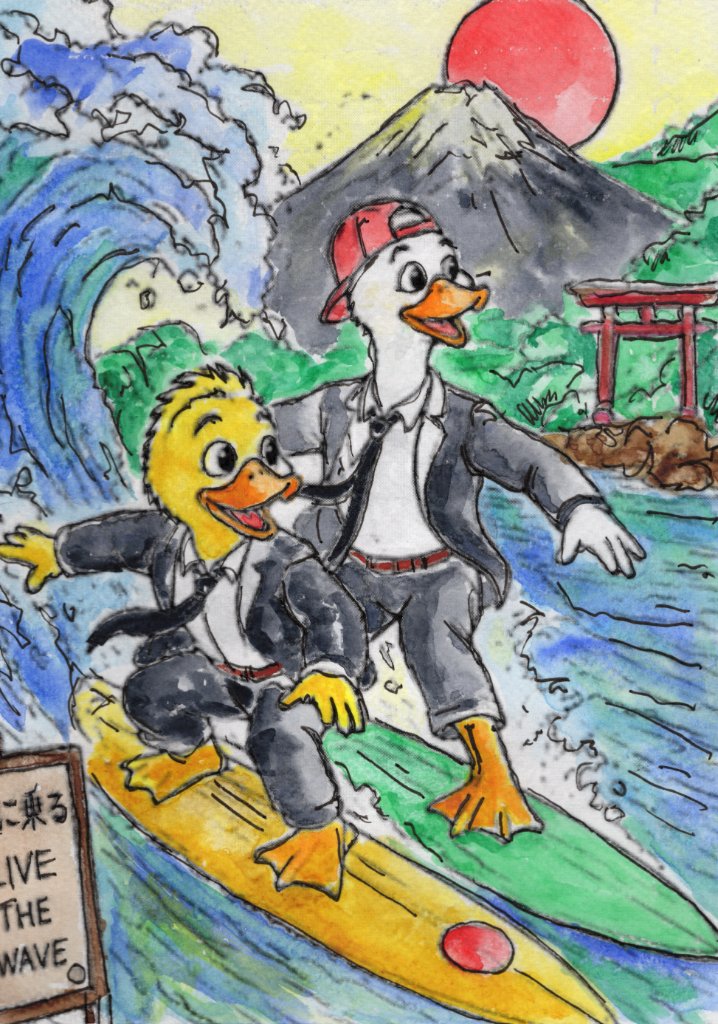
Each scene was chosen to capture a moment that military families might recognize: the first train ride, the first bowl of ramen, the first friend, the first festival, the first wave.
The narrative arc moves from uncertainty through curiosity into belonging. The artwork was painted to carry that emotional journey, not just the visual one.
“A place is not understood through its landmarks. It is understood through the moments that change you.”
Pencil construction lines visible beneath the paint
Sketches and Early Development
Before the Brush Touches Paper
Every painting in the Japan collection began as a small thumbnail sketch—a rough composition exploring character placement, horizon lines, and narrative focus.
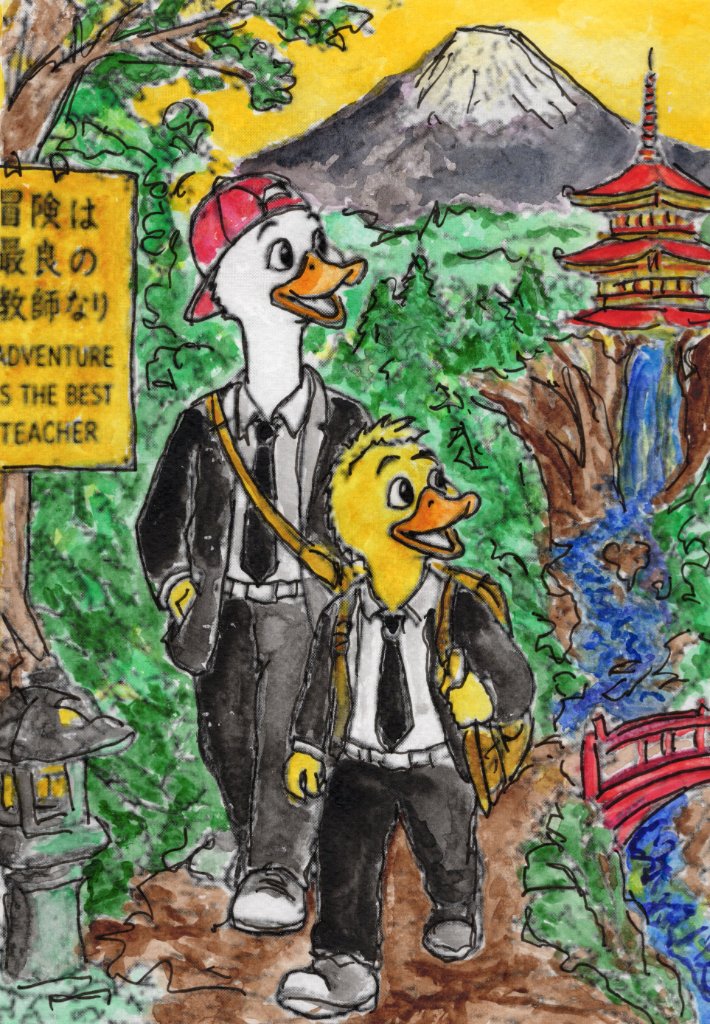
These early studies determined where Mount Fuji would sit in the frame, how Robert and Mike would interact with their surroundings, and which cultural details would anchor each scene.
The pencil construction lines visible beneath the finished watercolor are evidence of this planning stage. They show how each painting was built before a single drop of color was applied.
“The sketch is where the story finds its shape.”
Watercolor and Ink Process
Layer by Layer, Color by Color
Once the ink drawing was complete, each painting moved into watercolor. The process is slow and deliberate: wet-on-wet washes for skies and water, layered glazes for depth, dry brush for texture.
The Japan collection required a palette that could shift from the cool blues of mountain landscapes to the warm reds and golds of festival lanterns. Each color was mixed and tested before application.
The visible brushwork, pigment pooling, and small variations are not imperfections. They are the evidence of a hand at work—the qualities that distinguish an original watercolor from a digital rendering.
“Watercolor does not allow correction. Every layer is a commitment.”
Character and Composition Decisions
Placing Robert and Mike in the World
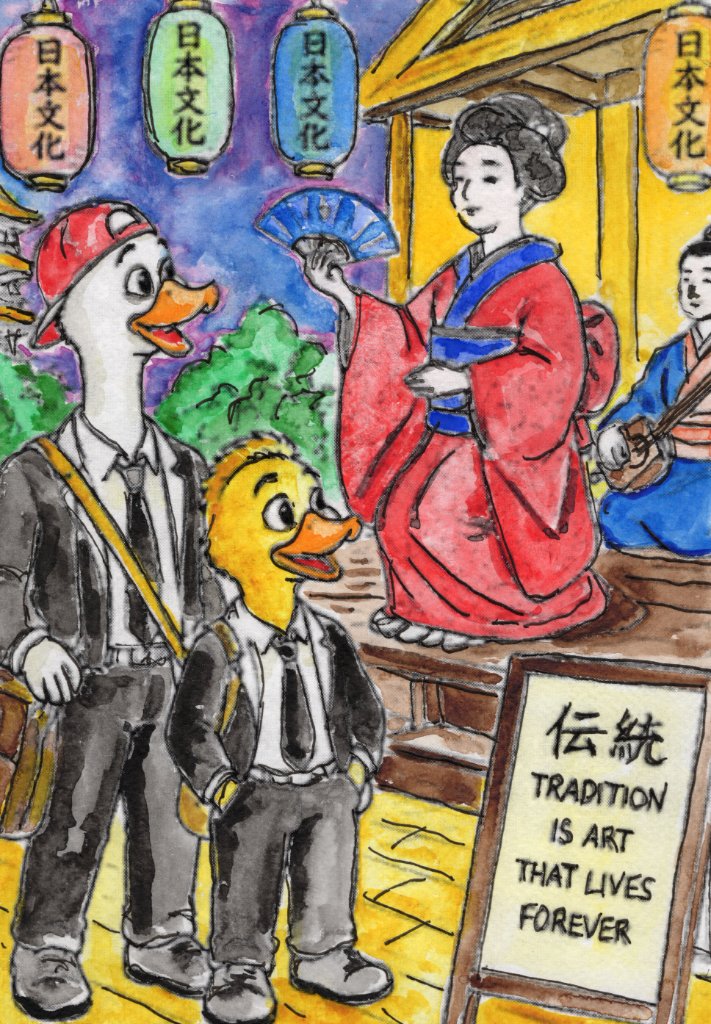
The placement of Robert and Mike within each scene was one of the most deliberate decisions in the Japan collection.
Sometimes they are small against a vast landscape, emphasizing the scale of Mount Fuji or the depth of a forest. Other times they are close, engaged in a meal or conversation, drawing the viewer into an intimate moment.
Their expressions, posture, and relationship to the environment tell the story without words. The composition was built to guide the eye through the narrative of each card.
“Where characters stand in the frame is where the story begins.”
Paper, Printing, and Color
From Original to Reproduction
After each painting was complete, it was carefully scanned at high resolution to capture the nuance of layered pigments, pencil lines, and paper texture.
The reproductions are printed on premium card stock selected for its weight, surface, and ability to hold faithful color. Each print is checked against the original to ensure the reproduction honors the painting.
The goal is not to create a perfect copy. It is to create an object that carries the spirit of the original watercolor into the hands of the collector.
“The reproduction should feel like the painting found a new home.”
Hand Finishing
The Final Touches by Hand
After printing, each card moves to the making table for hand finishing. Edges are checked. Color is inspected. An embossed mark is pressed into the stock.
These steps are done by hand because the tactile details matter. The impression of an embossment, the weight of the card, the texture of the paper—these are the qualities that transform a print into a collectible.
Every card is individually inspected before it enters a pack. Nothing leaves the studio without being held and checked.
“The final object should feel as considered as the painting itself.”
Packaging and Wax Sealing
The Ritual of Opening
Each pack is assembled by hand. Cards are placed in protective sleeves with archival tissue. A handwritten label identifies the collection.
The pack is then sealed with wax—a small ritual that transforms opening the collection into an experience rather than a transaction.
The packaging is designed to feel like opening a small expedition archive: protective, intentional, and personal.
“The seal is a promise that someone made this by hand.”
Artist’s Reflection
What the Japan Collection Became
The Japan Expedition began as an attempt to capture what it feels like to arrive in a country you do not yet know and slowly learn to love it.
Through drawing, painting, and careful composition, that feeling became a series of collectible cards—each one a small window into a moment of discovery.
The hope is that collectors will see not just illustrations of Japan, but evidence of a person’s attempt to understand and honor a place through art.
“Every brushstroke is a record of attention.”
Carry the Collection Home
Continue to the Expedition
Each gallery journey concludes with the same three pathways into the collectible collections.